
Thinking about cycling the Shimanami Kaido in summer? Based on real experience, this guide explains the benefits, heat precautions, hydration tips, and weather risks to help you plan safely.
Hello, I am Kawai, a cyclist living on the Shimanami Kaido. This is a personal website where I have gathered information for travel planning. It would be great if you could visit one of the most famous cycling routes in Japan.
Shimanami Kaido cycling
The Shimanami Kaido is an approximately 70-kilometer route connecting Onomichi City in Hiroshima Prefecture and Imabari City in Ehime Prefecture, linking a series of islands floating in the Seto Inland Sea by bridges. Among the several bridge routes that connect Honshu and Shikoku, it stands out for allowing cyclists to cross the sea by bicycle. Because of this unique feature, it has become a highly popular cycling destination, attracting riders not only from Japan but also from overseas.
![[Photo] Summer on the Shimanami Kaido: cycling across the 4 km Kurushima Kaikyo Bridge](https://touring-shimanami.com/wp-content/uploads/2026/01/summer-cycling-3.jpg)
The appeal of the Shimanami Kaido is not simply about covering a long distance. Rather, it lies in being able to enjoy, at your own pace, the changing scenery from island to island, calm coastal roads, and panoramic views of the Seto Inland Sea from the bridges. While there are some ups and downs, the route is not an extremely demanding mountain course, and it is well designed for sightseeing-oriented cycling using rental bikes.
![[Photo] Summer on the Shimanami Kaido: well-developed support for beginner cycling trips](https://touring-shimanami.com/wp-content/uploads/2026/01/summer-cycling-10.jpg)
In the past, the route was mainly ridden by core cyclists on road bikes and other performance-oriented bicycles. In recent years, however, improvements such as a well-organized rental cycle system and easy-to-follow road markings known as the Blue Line have made the Shimanami Kaido much more accessible. As a result, even beginners who are cycling long distances for the first time now find it easier to take on the challenge. It is also a great option for those who want to start cycling or try a bicycle trip as part of their travels.
In this article, I focus on cycling the Shimanami Kaido in summer (from July to September) and take a closer look at both the benefits and the points you should be careful about during this season.

From the end of the rainy season through September, summer is also a popular time for cyclists on the Shimanami Kaido!


AD (Google AdSense)
Benefits of Summer Cycling
In general, summer is often thought of as “too hot and unsuitable for cycling.” It is true that there are important things to watch out for, such as high temperatures and strong sunlight. However, if you understand these conditions and plan accordingly, summer—after the rainy season—offers unique attractions that you can fully enjoy on the Shimanami Kaido.
Surprisingly Few Extreme Heat Days
The Shimanami Kaido area is often associated with a warm climate, but in summer there are actually fewer extreme heat days (days with temperatures over 35°C) than many people expect. For example, in 2025, the number of days in Imabari with a maximum temperature of 35°C or higher totaled 11. By comparison, central Tokyo (Chiyoda Ward) recorded 29 such days. In other words, Imabari had less than half the number of extreme heat days compared to Tokyo.
| Number of Extreme Heat Days (2025) | Imabari | Omishima | Osaka | Tokyo |
|---|---|---|---|---|
| July | 6 days | 3 days | 17 days | 11 days |
| August | 5 days | 3 days | 23 days | 13 days |
| September | 0 days | 0 days | 2 days | 5 days |
| Total | 11 days | 6 days | 42 days | 29 days |
Omishima recorded even fewer extremely hot days than Imabari, with just six days in total. In contrast, Osaka experienced a record-breaking summer, with 42 extremely hot days—the highest number ever recorded. For people living in large cities, the Shimanami Kaido area might feel like a kind of “summer retreat,” or at least a place where the heat is a bit more manageable — though to be honest, living here still feels very hot at times….
Now, I would like to organize the benefits of summer cycling on the Shimanami Kaido that I have felt firsthand, from five different perspectives.
Benefit ① Long Daylight Hours
One of the biggest advantages of summer cycling is the long daylight hours. From around the summer solstice in June through August, sunrise is early and sunset is late, allowing you to secure much more time to ride during daylight. For example, there is a difference of about two and a half hours in sunset time between the summer and winter solstices. The difference in sunrise time is even greater—just over two hours.
| Imabari (2025) | Sunrise | Sunset |
|---|---|---|
| Summer Solstice (June 21) | 4:56 | 19:22 |
| Winter Solstice (December 22) | 7:09 | 17:03 |
This means that the total amount of daylight can differ by nearly five hours between summer and winter. On a relaxed rental bike ride, you can usually cover about 10 km per hour. Simply put, a five-hour difference translates into roughly 50 km of extra daylight riding time. For sightseeing cycling on the Shimanami Kaido, how much time you can ride in the daylight directly affects how enjoyable the experience is.
![[Photo] Summer Shimanami Kaido: Taking a break at the beach near Belvedere Setoda](https://touring-shimanami.com/wp-content/uploads/2026/01/summer-cycling-6.jpg)
Even if you take plenty of breaks or stop by sightseeing spots along the way, it is much easier to reach your goal before sunset, which provides real peace of mind. You can start early in the morning and cover distance before it gets too hot, relax at a café during the hottest part of the day, or slow down in the evening to enjoy the scenery. This ease of schedule management is, in my opinion, a major summer advantage—especially for beginners.
Avoid Riding During the Hottest Hours of the Day
I created a graph showing a typical temperature pattern on a summer day. The chart below displays the hourly observed temperatures on August 15, 2025, at three locations: Imabari, Omishima, and Ikuchijima. The red highlighted area marks the time of day when the heat peaks.
![[Graph] Hourly temperatures on August 15, 2025 (Imabari, Omishima, Ikuchijima) Created from data from the Japan Meteorological Agency](https://touring-shimanami.com/wp-content/uploads/2026/01/natsu20250815-e.png)
As you can see from the graph, if you want to avoid riding during the most intense heat while cycling the Shimanami Kaido, starting early and focusing your ride on the morning hours is clearly the best approach. Even in midsummer, early mornings are often surprisingly comfortable for cycling. Spending lunchtime relaxing at a restaurant or café, or taking a break in the shade or indoors during the hottest part of the day, is also a smart and enjoyable way to plan your ride.
Benefit ② Less Bulky Clothing
Another advantage of summer is that you hardly need any cold-weather gear, which keeps your luggage light and compact. In winter or during spring and autumn, you usually need extra layers or warm clothing to deal with temperature changes. In summer, however, you can ride comfortably with relatively light clothing.
![[Photo] Summer Shimanami Kaido: A small backpack is fine for summer cycling](https://touring-shimanami.com/wp-content/uploads/2024/10/innoshima-gaisyu-11.jpg)
This is especially helpful if you are using a rental bicycle, as there is a limit to how much you can carry in a backpack or small bag. With fewer bulky clothes, your bag stays simple, and that reduces stress while riding. Being able to narrow your gear down to the essentials—such as a change of clothes, a towel, and drinks—makes summer a great match for relaxed sightseeing cycling, in my opinion.
Benefit ③ Swimming in the Sea
The Shimanami Kaido is a route surrounded by the sea. In summer, one of the area’s unique attractions is that you can combine cycling with marine activities such as swimming, sea kayaking, or stand-up paddleboarding. Swimming in areas with strong ocean currents is extremely dangerous, but beaches such as Hakata Beach (Hakatajima), Setoda Sunset Beach (Ikuchijima), and Shimanami Beach (Innoshima) are open in the summer.
![[Photo] Summer Shimanami Kaido: Sea kayaking experience at Setoda Sunset Beach](https://touring-shimanami.com/wp-content/uploads/2026/01/summer-cycling-1.jpg)
Being able to wash away your sweat in the sea, cool down for a bit, and then get back on the bike is a pleasure unique to summer. Rather than focusing solely on completing the entire route, having the option to “stop and play” along the way is, I think, one of the real joys of summer cycling on the Shimanami Kaido.
Benefit ④ The Refreshing Feeling of Sweating
Summer inevitably means sweating because of the heat, but at the same time, it is also a season when you can strongly feel how refreshing it is to sweat. The sense of accomplishment after a ride, and the sheer comfort of taking a shower or soaking in a hot bath afterward, can feel even better than in other seasons.
![[Photo] Summer Shimanami Kaido: A refreshing winding road on Omishima Island](https://touring-shimanami.com/wp-content/uploads/2026/01/summer-cycling-5.jpg)
On routes like the Shimanami Kaido, where there are relatively few traffic lights and many sections allow you to maintain a steady rhythm, you can enjoy the almost meditative feeling of turning the pedals while working up a sweat. It is certainly not physically easy, but being able to clearly feel that “I really exercised” is one of the charms of summer cycling.
Benefit ⑤ Deep Blue Seas and Lush Green Mountains
One of the most striking features of the Shimanami Kaido in summer is the vivid blue of the sea and the deep green of the mountains. Thanks to the strong sunlight, the Seto Inland Sea appears even more intensely blue, while the islands are wrapped in rich, powerful greenery. In winter, many trees on the islands lose their leaves or turn brown, and it can sometimes be difficult to capture the classic “Shimanami Kaido scenery” people often imagine. From spring through summer, there are many landscapes that are especially photogenic.
![[Photo] Summer Shimanami Kaido: The iconic scenery that defines the route](https://touring-shimanami.com/wp-content/uploads/2026/01/summer-cycling-9.jpg)
Even when riding the same route, the impression of the scenery changes dramatically with the season. Being able to experience these high-contrast, summer-only landscapes at the relaxed pace of a bicycle feels like a special luxury that is unique to cycling the Shimanami Kaido.
Summer cycling on the Shimanami Kaido comes with lots of its own special pleasures too.
Maps you should get in advance
“CycloTourisme Shimanami,” which has been active in cycle tourism and regional promotion for nearly 20 years along the Shimanami Kaido, publishes guidebooks and maps. The map is also available in English and is extremely popular as it is the most detailed cycling-specific map in this region.
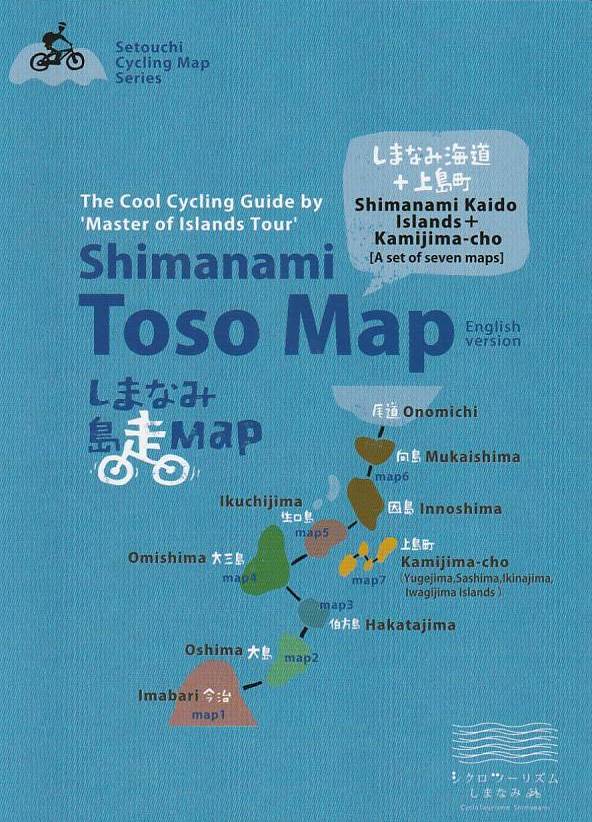
This product comes with a set of seven maps, each with a fairly detailed map for each island. I believe that getting your hands on this map will change your experience here. It can be purchased on Amazon.co.jp, and you can also buy it locally at Guesthouse CYCLONOIE in front of Imabari Station.
AD (Google AdSense)
Things to Keep in Mind for Summer Cycling
So far, I have covered the unique advantages of cycling the Shimanami Kaido in summer. At the same time, it is also true that there are points you need to be especially careful about precisely because it is summer. From July to September, weather conditions can change quickly, and your preparation and on-the-spot decisions can greatly affect both comfort and safety. Here, I would like to share three key points that I personally pay close attention to when cycling in summer.
Point to Note ① Heatstroke and Sunburn Prevention Are Essential
The most important thing to watch out for when cycling in summer is preventing heatstroke and sunburn. The Shimanami Kaido features many open coastal sections, and on bridges or around the outer edges of the islands, there are quite a few stretches with very little shade. When there is a breeze, it can feel pleasantly cool, but that can also make it easier to overlook how much physical energy you are actually losing.
Climate Normals 1991–2020 (Based on JMA Data)
| Imabari (Normals) | Average Temp (°C) | Avg. Daily High (°C) | Avg. Daily Low (°C) |
|---|---|---|---|
| July | 26.2 | 30.7 | 22.7 |
| August | 27.4 | 32.2 | 23.9 |
| September | 24.0 | 28.2 | 20.4 |
| October | 18.6 | 22.9 | 14.6 |
In addition to wearing a hat or helmet liner and sunglasses, sunscreen is an essential item. Rather than forcing yourself to keep riding during the hottest part of the day, it is important to plan your schedule wisely—for example, by starting early in the morning or taking longer breaks around midday. If you feel even a slight sense of discomfort or fatigue, I recommend making the decision to rest sooner rather than later.
Point to Note ② Frequent Hydration Is Crucial
When cycling in summer, both the frequency and the amount of fluid intake become extremely important. Because you sweat heavily, it is easy to become dehydrated without realizing it. By the time you feel thirsty, you may already be in a mild state of dehydration.
![[Photo] Summer Shimanami Kaido: Shimanami Water, a hydration drink](https://touring-shimanami.com/wp-content/uploads/2026/01/summer-cycling-8.jpg)
Across the islands of the Shimanami Kaido, vending machines and convenience stores are scattered along the route, so it is usually not difficult to find drinks. Still, it is safer to think, “If I see a chance, I’ll refill.” In addition to water or tea, choosing sports drinks that replenish salt and minerals can help you ride more safely. This is especially important for beginners, who should make a conscious effort to hydrate regularly.
Point to Note ③ Pay Attention to Forecasts for Heavy Rain and Typhoons
From July to September, the area is also more likely to be affected by typhoons and sudden heavy rain. Even if the forecast shows clear weather several days in advance, conditions can change quickly, so it is important to check the weather not only before departure but also regularly during your trip.
![[Photo] Summer Shimanami Kaido: Cycling road in rainy conditions](https://touring-shimanami.com/wp-content/uploads/2026/01/summer-cycling-2.jpg)
Cycling in strong winds or heavy rain can be physically and mentally exhausting, and on bridges in particular, it can sometimes feel dangerous. If the weather looks like it may worsen, it is important not to push yourself and to be flexible enough to change your plans. The Shimanami Kaido is a route where it is relatively easy to stop or exit partway through, so planning with the option of “not riding today” in mind can ultimately lead to a safer and more satisfying trip.

AD (Google AdSense)
Summer winds in the this area
During summer (from July to September), the Shimanami Kaido generally enjoys calm winds, making it a pleasant season for cycling. Although southerly winds are common under the influence of the Pacific high-pressure system, the Seto Inland Sea is surrounded by mountains, so strong seasonal winds tend to be weakened.
![[Photo] Shimanami Kaido in summer: The wind calms down in the evening as the sea breeze and land breeze switch over.](https://touring-shimanami.com/wp-content/uploads/2026/01/yunagihour.jpg)
Another characteristic of this area is the regular sea and land breeze cycle: during the day, a breeze blows in from the sea, while at night it shifts to a breeze from the land. In the evening, the wind often eases into a calm known as yūnagi, which can make the air feel more humid.
July and August usually see gentle average wind speeds, and wind rarely becomes a major obstacle for cyclists. However, in September, approaching typhoons can suddenly bring strong winds. When cycling the Shimanami Kaido in summer, I believe it’s more important to keep an eye on changing weather forecasts than to worry about the wind itself.
AD (Google AdSense)
The Best Season for Cycling the Shimanami Kaido
The Shimanami Kaido is an area blessed with a mild climate that allows you to enjoy cycling throughout the year. As the seasons change, so do the scenery, the feel of the air, the seasonal foods, and the overall style of travel. In summer, for example, the colors of the sea and sky become more vivid, creating a strong sense of openness, while at the same time making it essential to prepare for heat and strong sunlight.
![[Photo] Summer Shimanami Kaido: A cycling journey that changes with the seasons](https://touring-shimanami.com/wp-content/uploads/2026/01/summer-cycling-4.jpg)
In addition, each season brings differences in available riding hours based on sunrise and sunset times, as well as varying tendencies in weather risks such as rain and wind. I feel that understanding these seasonal conditions and planning accordingly is a key factor in making your Shimanami Kaido cycling experience both safe and highly satisfying.
On my website, I organize information from various perspectives around the theme of “which season is best for cycling the Shimanami Kaido.” If you are traveling from far away, you will likely want to choose a time when the conditions suit you as well as possible. That said, what “best season” means can differ from person to person, depending on what you value most in your journey.

Do you want to focus on enjoying the scenery, prioritize ease of riding, or fully enjoy local food and sightseeing as well? I hope you will find your own personal “best” and head out to experience cycling on the Shimanami Kaido
This page has introduced the unique benefits and points to note when cycling the Shimanami Kaido in summer. One of the great attractions of the Shimanami Kaido is that it offers many different ways to enjoy cycling throughout the year, depending on the season. For those who are planning their first Shimanami Kaido cycling trip and would like more detailed information, I explain everything thoroughly on the page below, so please be sure to take a look.