

When is the best season for cycling the Shimanami Kaido? Let’s explore from different perspectives, such as comfortable temperatures for long rides, beautiful scenery, and delicious local foods.
Hi, I’m Yuki KAWAI — a touring cyclist based along the Shimanami Kaido. Having cycled this route more than 300 times, I created this site to share practical, experience-based tips for anyone planning a cycling trip here. I hope it helps you make the most of one of Japan’s most beloved cycling destinations.
The Sunny Shimanami Kaido
The Western Seto Inland Sea
The Shimanami Kaido is a famous cycling route connecting Japan’s main island of Honshu and Shikoku. It stretches between Onomichi City in Hiroshima Prefecture and Imabari City in Ehime Prefecture. The course lets cyclists ride across several bridges connecting islands densely scattered in the area called the Geiyo Islands. Among international travelers, cycling the Shimanami Kaido is well-known as a must-do activity when visiting Japan.
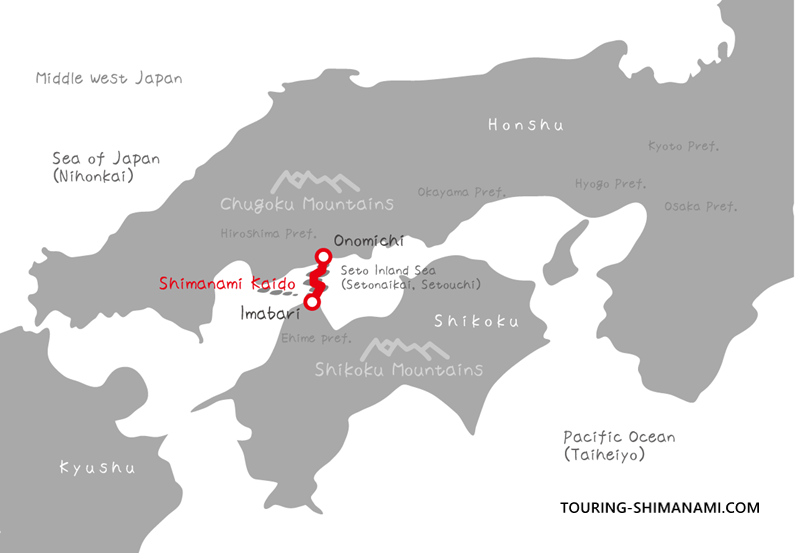
The Shimanami Kaido runs across the Seto Inland Sea (Setouchi, Setonaikai), positioned towards its western side when viewed on a map. The Seto Inland Sea itself is located between the Chugoku Mountains of Honshu and the Shikoku Mountains of Shikoku. While the sea connects to both the Pacific Ocean and the Sea of Japan, it is mostly surrounded by land. You can think of it as Japan’s version of the Mediterranean Sea.
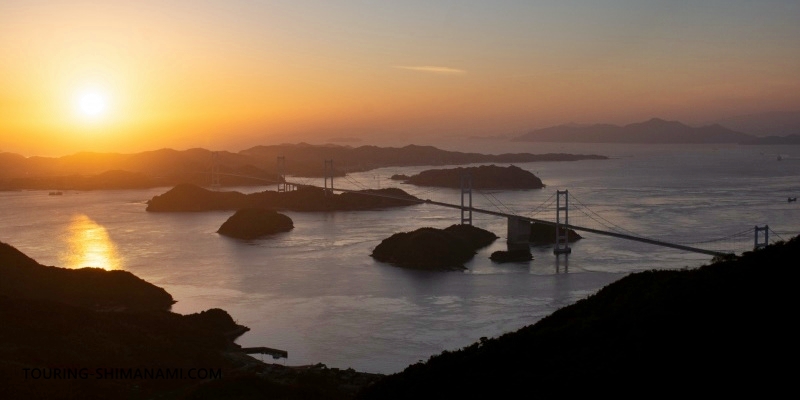
As you might know, Japan has four distinct seasons, each offering its own unique beauty. Also, because Japan stretches long from north to south, the climate can vary greatly depending on the region. For example, the temperatures in Hokkaido and Okinawa can be completely different during the same season.
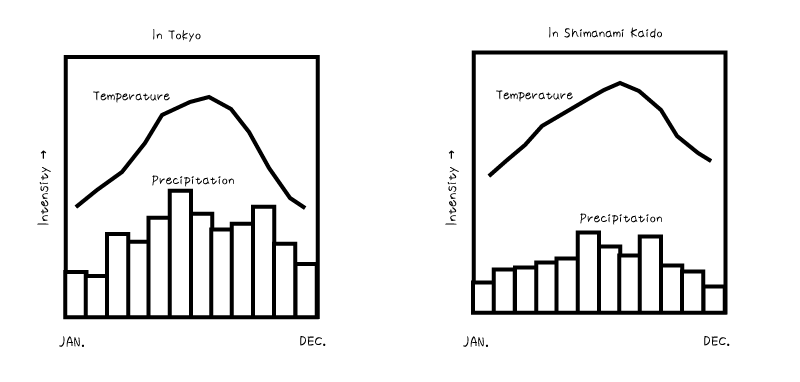
When I look into the climate around the Shimanami Kaido, I find it is often described as having a “Seto Inland Sea climate” or belonging to the “Seto climate zone”. Compared to Tokyo, this area tends to be warmer and receives less rainfall. Warm and dry weather throughout the year makes it an ideal place to enjoy outdoor activities like cycling! This might be one of the reasons why the Shimanami Kaido is called a cyclist’s paradise. After all, a cycling route that rains all the time would be disappointing, wouldn’t it?
- Can you enjoy the Shimanami Kaido all year round?
- Best seasons based on weather and seasonal foods
- Seasonal tips for beginner cyclists
Seto Inland Sea Climate
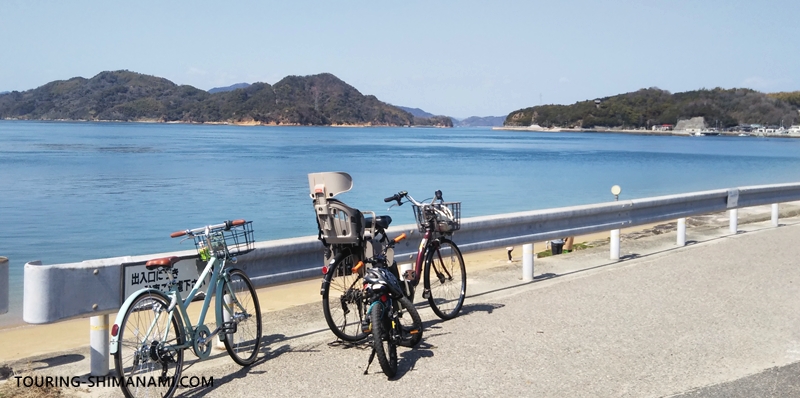
The reason the Seto Inland Sea area is warm with little rainfall is largely due to its geographical location, surrounded by the Shikoku Mountains to the south and the Chugoku Mountains to the north.
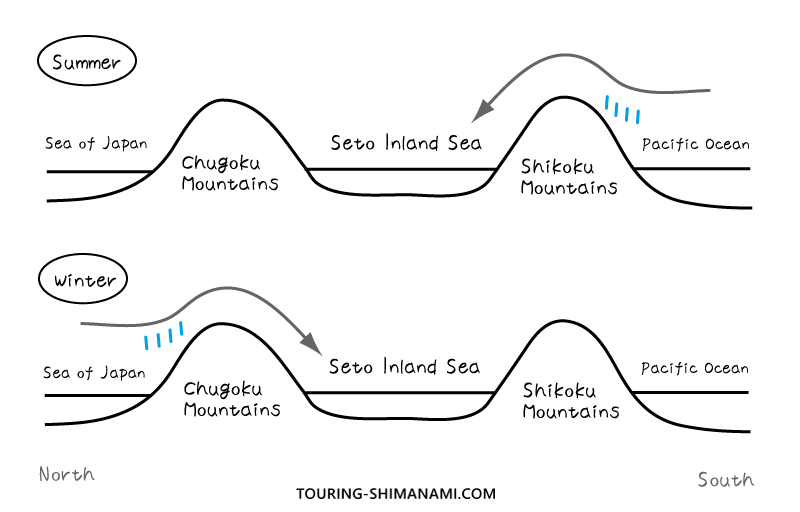
In summer, moist air flows in from the Pacific Ocean, but after releasing rain over the Shikoku Mountains, dry air descends over the Seto Inland Sea. In winter, moist air comes from the Sea of Japan side, but after snow falls over areas like Tottori and Shimane, as well as the Chugoku Mountains, similarly dry air flows down towards the Seto Inland Sea.


It’s interesting to learn that the Shimanami Kaido’s perfect cycling climate is actually supported by geography!
AD (Google AdSense)
Best Season
A Cycling Route Enjoyable All Year Round
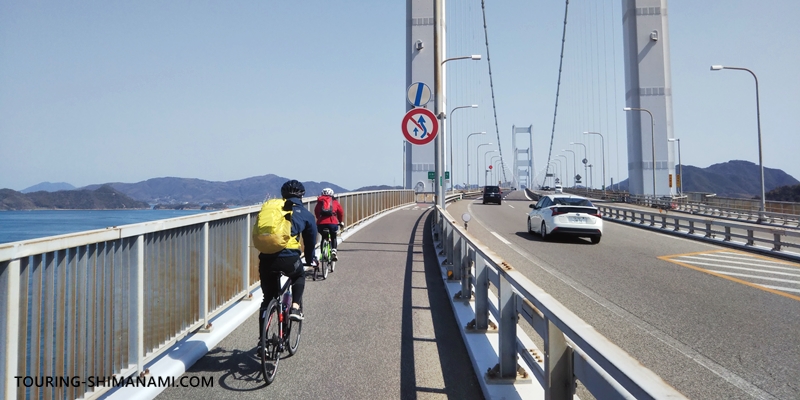
Thanks to its mild weather and low rainfall throughout the year, you’ll often see cyclists and bicycle travelers on the Shimanami Kaido no matter the season. Except during Japan’s rainy season or typhoon periods, there’s really no time of year that is completely unsuitable for cycling. The islands along the route show different charms in each season—spring, summer, autumn, and winter. I hope you’ll enjoy cycling the Shimanami Kaido in every season!
Peak Season and Off-season
Even though you can enjoy cycling the Shimanami Kaido throughout the year, there are clearly times when more cyclists and bicycle travelers visit, and quieter times with fewer people. Besides weather factors like temperature and rainfall, other reasons such as national holidays, long school vacations, and work breaks also affect the number of visitors.
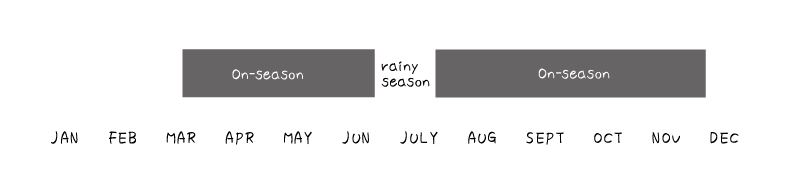
The so-called peak season for cycling the Shimanami Kaido is from mid-February until the start of the rainy season and from the end of the rainy season until mid-December. On the other hand, mid-December to mid-February and the rainy season itself tend to feel like the off-season, with fewer cyclists on the route. Even within the peak seasons, holidays like Golden Week in May and the summer vacation period in August can get particularly crowded. During these times, it’s not unusual for rental bicycles to be fully booked, especially during Golden Week.
Best Season in Terms of Weather
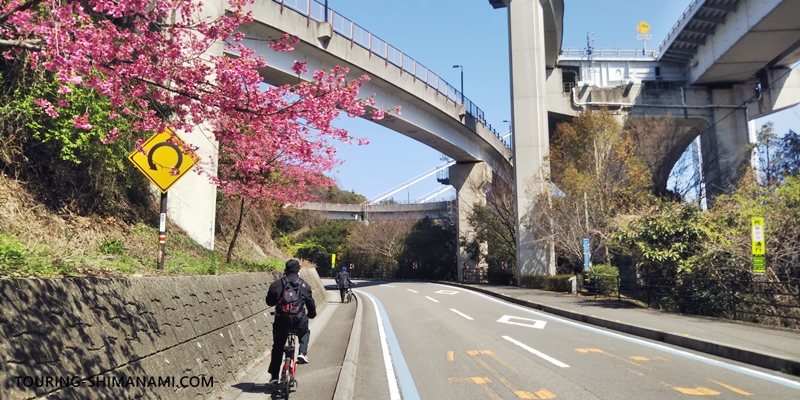
Within the peak seasons from early March to before the rainy season and after the rainy season to late November, the best times in terms of temperature and weather are definitely spring (April to May) and autumn (late September to November).
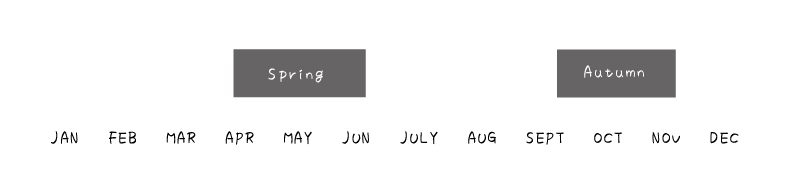
Even though the area generally has a mild climate, winter can still be cold, and in the peak of summer, daytime temperatures often rise above 30°C. That’s why spring, when the weather is warm and pleasant, and autumn, when the heat of summer has eased and the sightseeing season begins, offer the most comfortable cycling conditions along the Shimanami Kaido.
Cherry blossom season is especially beautiful
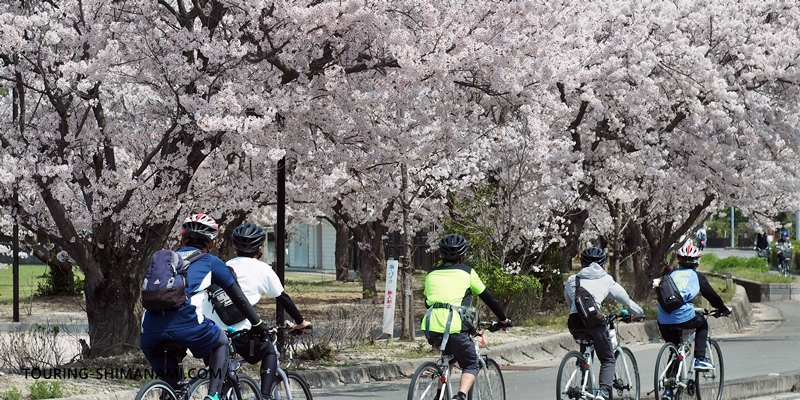
Among the spring months, cherry blossom (Sakura) season stands out as a particularly special time. While the Shimanami Kaido area doesn’t have many famous autumn foliage spots, it does have plenty of beautiful cherry blossom viewing locations. Spring is also when the mountains turn bright green with fresh leaves, making this season very photogenic.
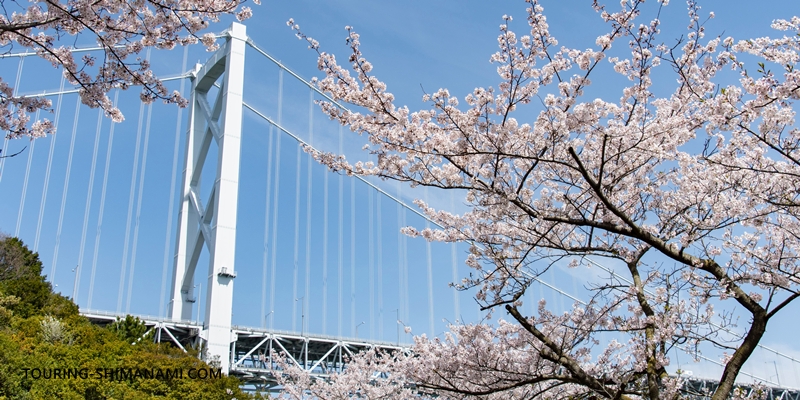
Along the cycling route of the Shimanami Kaido, you’ll find cherry trees planted in many places. You can even photograph views of the bridges together with the cherry blossoms. Mt. Hiraki Obervatory Park on Hakatajima island and Mt. Sekizen on Iwagijima island are especially famous, with thousands of cherry trees planted there, making them popular spots for hanami (cherry blossom viewing). On weekends during the cherry blossom season, it’s common for roads leading up to these spots to become congested with visitors.
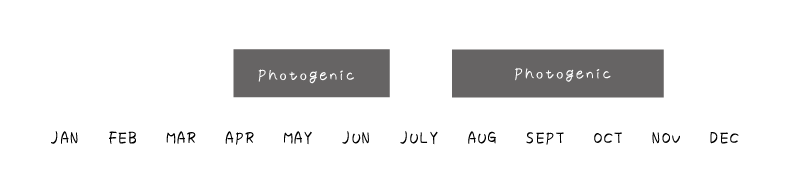
If your goal is to take beautiful photos, spring or summer are the best seasons to visit.
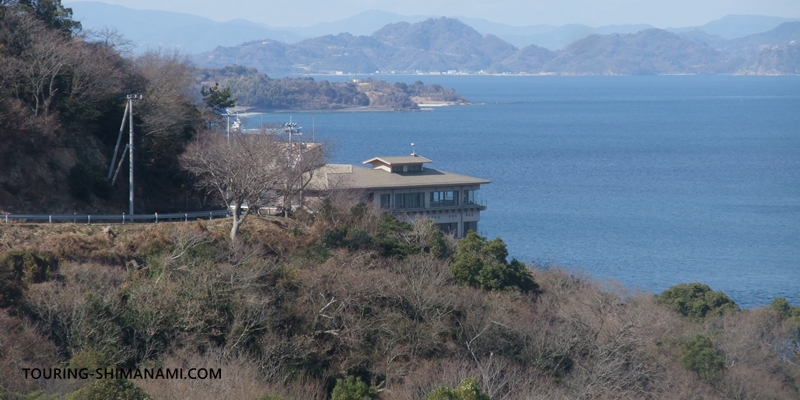
During winter months like December and January, most of the trees lose their leaves, turning the island scenery brown. Since it rarely snows in this area, it’s also difficult to capture snowy landscapes. On the other hand, the fresh green of spring and the bright summer sunlight make those seasons much better for photography.
Best Season for Seasonal Foods
The Shimanami Kaido, especially the Ehime Prefecture side, is famous for mikan (mandarin oranges) and other citrus fruits. Even on the Hiroshima side, islands like Ikuchijima island are known as major production areas for domestic lemons. If you’re cycling the Shimanami Kaido, you’ll definitely want to try these delicious local citrus fruits. Depending on the variety, harvesting times vary, but in general, the peak citrus season is in winter. From spring through autumn, it’s harder to find freshly harvested citrus fruits.
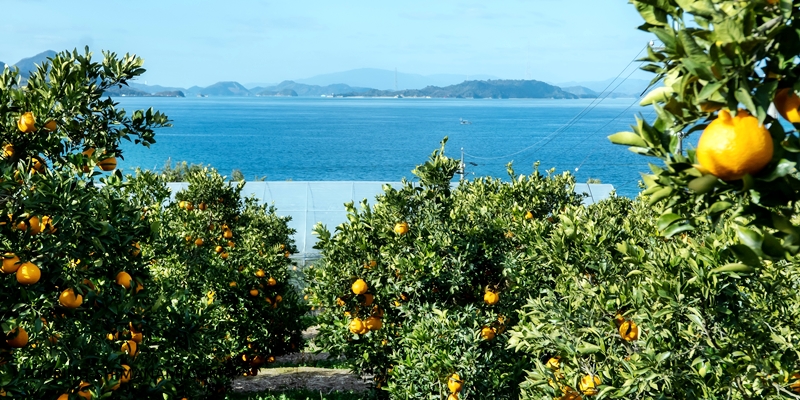
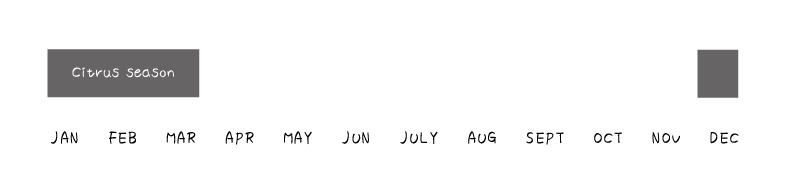
If you’re interested in enjoying citrus fruits as part of your Shimanami Kaido cycling trip, I recommend planning your visit during winter. Although this is the off-season in terms of cycling weather, the routes are less crowded, making for a more relaxed cycling experience. In fact, many of the fresh seafoods from the Seto Inland Sea are also in season during winter. If you want a cycling trip focused on food, winter is definitely a great time to visit.
Winter Cycling is Also Recommended
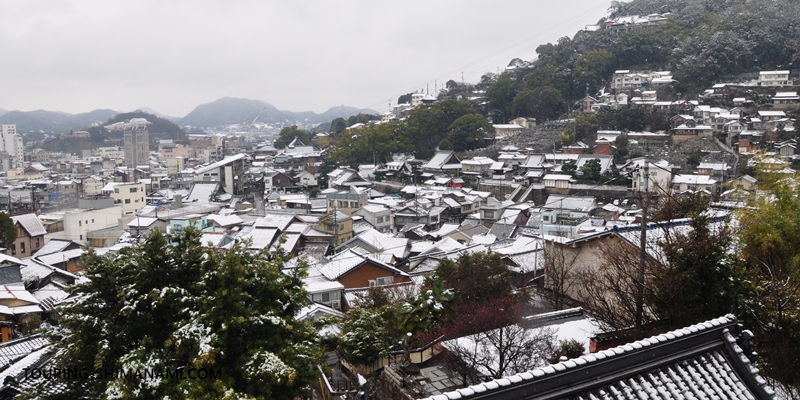
Snowfall around the Shimanami Kaido area is extremely rare. Around Onomichi, snow may accumulate slightly in the early morning, but it usually melts completely by midday. You generally don’t need to worry about snow preventing you from cycling. Personally, I actually recommend winter cycling. On clear days in December and January, the crisp, clean air gives you stunning, far-reaching views of the islands. Best of all, you won’t get drenched in sweat like in summer!

Season with Little Precipitation
![[Graph] Average precipitation for Imabari City (created from meteorological data from the Japan Meteorological Agency)](https://touring-shimanami.com/wp-content/uploads/2025/07/prec.png)
Another unique feature of winter in the Seto Inland Sea area is that it is the season with the least amount of precipitation throughout the year. The graph above shows average precipitation in Imabari based on data from the Japan Meteorological Agency(JMA). Monthly precipitation from December to February is around 50 mm. Weather is important for cycling. Deciding what season to visit the Shimanami Kaido is a major factor when planning your trip.

Maps You Should Get in Advance
“CycloTourisme Shimanami,” which has been active in cycle tourism and regional promotion for nearly 20 years along the Shimanami Kaido, publishes guidebooks and maps. The map is also available in English and is extremely popular because it is the most detailed cycling-specific map in this region.
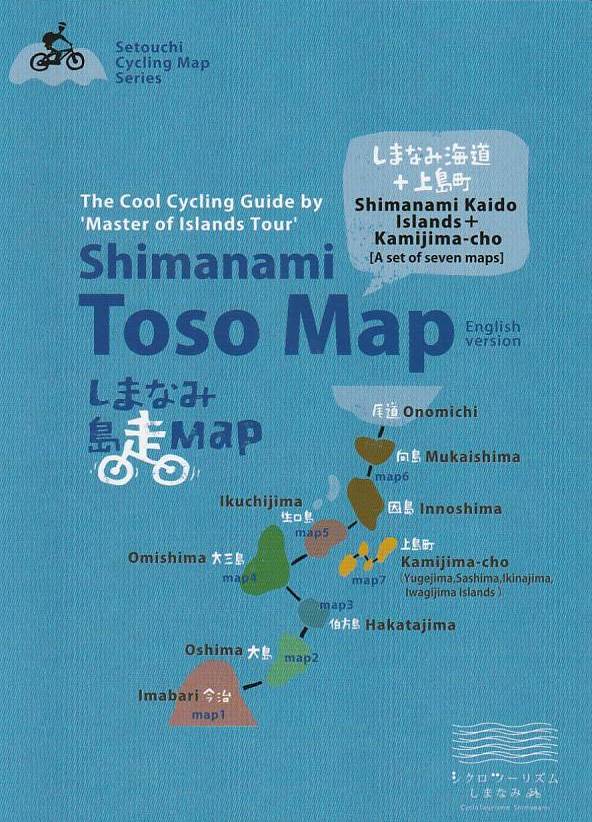
This product comes with a set of seven maps, each with a fairly detailed map for each island. I believe that getting your hands on this map will change your experience here. It can be purchased on Amazon.co.jp, and you can also buy it locally at Guesthouse CYCLONOIE in front of Imabari Station.
Seasonal Safety Tips
What to Watch Out for in Summer and Winter
Cycling in the more extreme seasons—summer and winter—has both advantages and things to watch out for. Below is a table summarizing the key points for each season.
| Season | Summer | Winter |
|---|---|---|
| Advantages | ・Long daylight hours ・Lightweight clothing ・Good to swim in the sea | ・Clear, crisp air ・Citrus season (lemons and other fruits) ・No sweating ・Fewer tourists, peaceful atmosphere |
| Things to Watch Out For | ・Need sun protection and heatstroke prevention ・Stay hydrated regularly | ・Be aware of early sunsets ・Dress warmly and use proper winter gear |
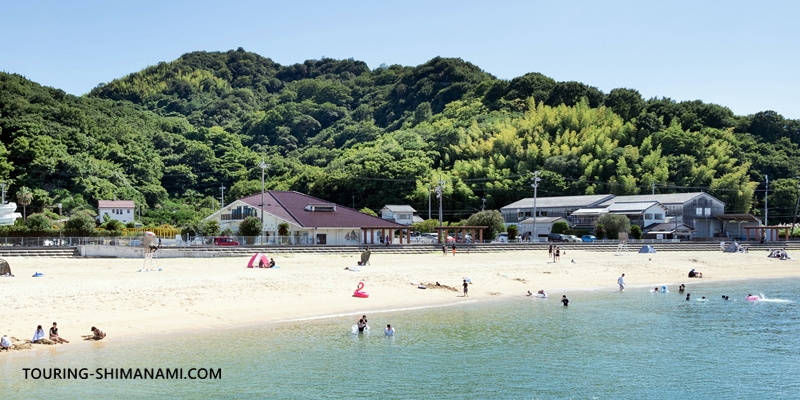
In summer, it’s especially important to protect yourself from heatstroke and sunburn. Along the Shimanami Kaido, you’ll find vending machines, convenience stores, and supermarkets on the islands, so you can easily buy drinks and sunscreen locally. Because cycling creates a constant breeze, many people don’t realize they’re overheating until it’s too late. Make sure to drink water frequently while you ride.
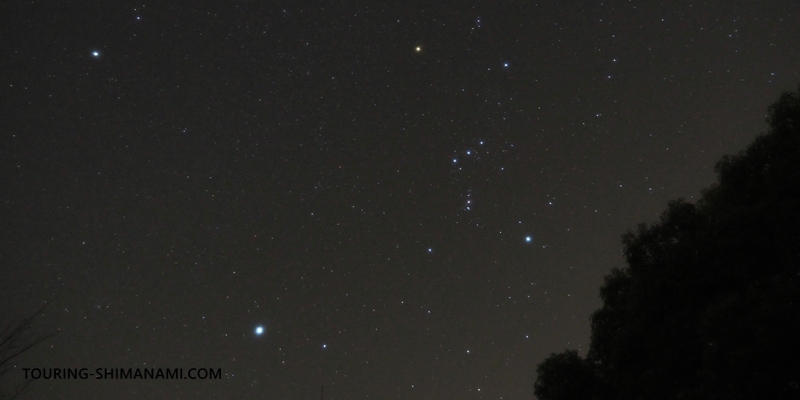
One important tip, especially for those new to bicycle touring, is to be mindful of the sunset time. On the islands along the Shimanami Kaido, it can get completely dark after sunset in many areas. Riding on unfamiliar roads in complete darkness can be very frightening.
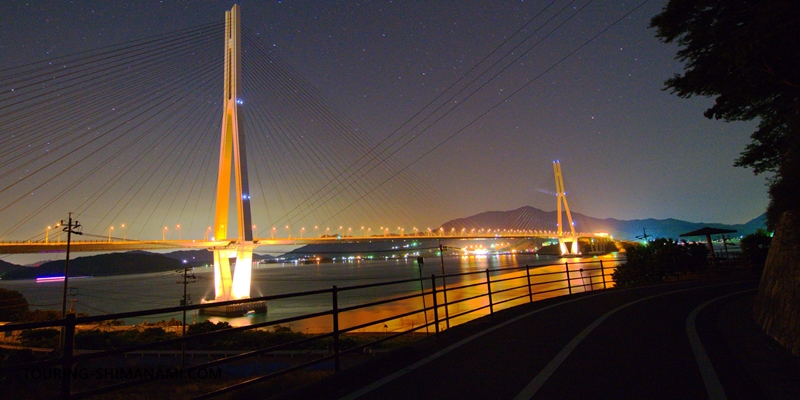
Depending on where you’re from, you might be surprised at how different sunrise and sunset times are in Japan, even during the same season. It’s important to check sunset times for the period of your trip and plan accordingly to avoid riding after dark. This is especially important for winter cycling, when the sun sets early.
AD (Google AdSense)
Through Weather Data
The Percentage of “Good Cycling Days” Based on Weather Data
So far, I have talked about the best seasons based mainly on experience and general impressions. But I also tried looking at it from another perspective. Using data from the Japan Meteorological Agency, I compiled monthly rainfall and sunshine hours for four years (2022–2025) at three locations in the Shimanami Kaido area: Imabari, Omishima, and Ikuchijima.
For this analysis, I grouped the conditions into three categories. A “good cycling day” is a day with almost no rainfall and at least five hours of sunshine. A “cloudy or unstable day” is a day with some rain but still at least three hours of sunshine. A “rain cancellation level” day means 10 mm or more of rain with almost no sunshine. Rather than simply showing which months have more or less rain, this analysis highlights the percentage of days when you can actually enjoy comfortable cycling.
Monthly number of “good cycling days”
The table below shows the approximate number of days for each condition by month, based on the average weather data from the three locations (2022–2025 average).
Source: Japan Meteorological Agency weather data (average of three locations: Imabari, Omishima, and Ikuchijima)
| Month | Good cycling days (0 mm / 5+ hours of sunshine) | Cloudy or unstable days (0.5–5 mm / 3+ hours of sunshine) | Rain cancellation level (10+ mm / less than 1 hour of sunshine) |
|---|---|---|---|
| Jan | 22.4 days | 0.4 days | 0.3 days |
| Feb | 17.5 days | 0.9 days | 1.9 days |
| Mar | 16.6 days | 0.8 days | 2.6 days |
| Apr | 17.8 days | 1.1 days | 2.1 days |
| May | 19.3 days | 1.0 days | 2.3 days |
| Jun | 14.1 days | 1.0 days | 3.6 days |
| Jul | 19.5 days | 0.9 days | 2.8 days |
| Aug | 22.3 days | 1.2 days | 1.1 days |
| Sep | 17.5 days | 0.9 days | 1.0 days |
| Oct | 19.1 days | 1.3 days | 1.4 days |
| Nov | 20.8 days | 0.6 days | 0.8 days |
| Dec | 21.9 days | 0.3 days | 0.3 days |
Best Seasons Based on Weather Data
If you want to minimize the risk of rain, I recommend November, December, and January. Temperatures are cooler, but these months have the highest proportion of good cycling days and the lowest risk of rain severe enough to cancel your ride. If you want a balance between comfortable temperatures and stable weather, May and October are excellent choices. These months have around 19 good cycling days on average, pleasant temperatures, and a relatively low chance of encountering rain at cancellation level. They also coincide with what many people consider the best seasons climatically.
If possible, it’s a good idea to allow a buffer day in June or July. During Japan’s rainy season, statistics show a higher number of days with heavy rain, so there is a greater chance that you might not be able to ride as planned. Having a more relaxed itinerary—such as staying a couple of nights and waiting for a break in the weather—can make the trip much less stressful.
Of course, these are only general trends based on four years of data, and they don’t guarantee the conditions in any specific year or on any particular day. Before your trip, be sure to check the latest weather forecast as well.
AD (Google AdSense)
Windy Seasons
When cycling the Shimanami Kaido, another weather factor to think about—along with rain—is the wind. With rain, the main solution is simply to wear rain gear. Wind, however, is a little different. If you check the wind forecast in advance and choose your starting point and direction wisely, it can actually become a strong ally, pushing you along with a helpful tailwind.
That’s why it helps to understand the seasonal wind patterns in the Shimanami Kaido area. When I analyzed weather data from three locations—Imabari, Omishima, and Ikuchijima—over four years (2022–2025), I found that the seasonal differences in wind strength are even larger than those seen in the rainfall data.
Monthly Wind Strength Trends (Average of Three Locations)
I divided wind strength into three categories and counted how many days in each month fall into each category.
- Light wind days: Maximum wind speed below 5.0 m/s
- Moderately windy days: Maximum wind speed 5.0–9.9 m/s
- Very windy days: Maximum wind speed 10.0 m/s or higher
| Month | Light wind days (below 5.0 m/s) | Moderately windy days (5.0–9.9 m/s) | Very windy days (10.0 m/s or higher) |
|---|---|---|---|
| Jan | 10.3 days | 19.1 days | 1.6 days |
| Feb | 9.0 days | 19.0 days | 3.0 days |
| Mar | 11.2 days | 17.7 days | 2.1 days |
| Apr | 15.6 days | 13.5 days | 0.9 days |
| May | 20.5 days | 9.8 days | 0.7 days |
| Jun | 23.8 days | 7.0 days | 0.2 days |
| Jul | 24.5 days | 6.5 days | 0.0 days |
| Aug | 24.1 days | 6.1 days | 0.8 days |
| Sep | 22.5 days | 6.4 days | 1.1 days |
| Oct | 22.9 days | 8.1 days | 0.0 days |
| Nov | 16.4 days | 13.5 days | 1.1 days |
| Dec | 9.3 days | 18.9 days | 2.8 days |
Best Seasons From a Wind Perspective
Based on this data, the most favorable period for cycling in terms of wind is May to October. In particular, June, July, August, and October tend to have especially calm conditions, which makes them a good choice for beginners or for those who want to take their time enjoying the scenery. Winter (December to February) has more days with stronger winds, but it also has its own unique appeal, such as clear air and quieter roads. If you check the wind forecast carefully and choose a day with a favorable tailwind, winter cycling can still be very enjoyable.
I have summarized practical tips for dealing with wind on this page, so please take a look if you’d like more details.

Check the Wind Direction Too
From my own experience, wind can have a big impact on cycling. I’ve had days when a strong headwind slowed me down so much that the ride took more than two hours longer than expected. In another article I recommend that “starting from Imabari makes it easier to benefit from a tailwind”, but in any case, when planning a Shimanami Kaido ride, I suggest checking not only the weather forecast but also the wind direction forecast.
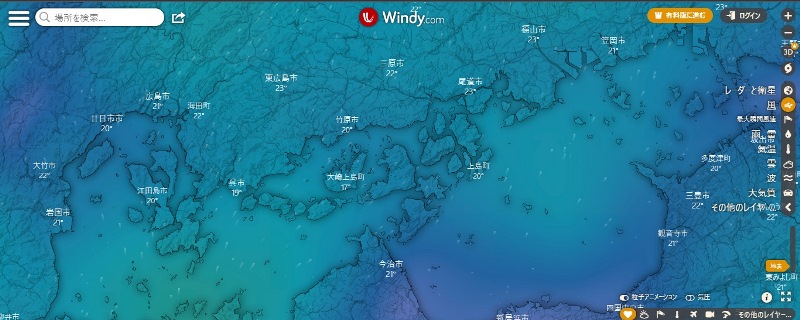
These days, many websites provide highly accurate wind forecasts generated by advanced weather models and supercomputer simulations. Personally, I often use a website called Windy to check the wind direction forecast. It provides clear visual maps that make it easy to understand the wind conditions around the Shimanami Kaido.
*This is not an advertisement for Windy.com. I’m simply sharing it because I personally find it useful.
AD (Google AdSense)
Busy Periods: Holidays and School Vacations
Japan’s Holiday Calendar is Unique
One thing that can catch international visitors off guard is how concentrated Japan’s travel seasons are. Unlike countries where vacations tend to be spread throughout the year, most Japanese people travel during a small number of fixed holiday windows. During these periods, popular destinations — including the Shimanami Kaido — can become noticeably busier than the rest of the year.
![[Photo] Shimanami Kaido rental bicycles during Golden Week: people lining up from early morning to rent bikes](https://touring-shimanami.com/wp-content/uploads/2023/05/golden-week-3.jpg)
As someone who lives and cycles in this area year-round, I’ve seen firsthand how the atmosphere on the route changes during these times. It doesn’t mean you can’t enjoy the Shimanami Kaido during busy periods, but knowing what to expect — and how to prepare — will make a real difference to your experience.
Golden Week (Late April to Early May)
The biggest holiday period in Japan is Golden Week, a cluster of national holidays that runs from around April 29 to May 5. In terms of cycling conditions, the timing is almost ideal: temperatures are mild and comfortable, cherry blossoms are finishing, and fresh green leaves are beginning to appear on the hillsides.
![[Photo] Shimanami Kaido rental bicycles during Golden Week: advance reservations for rental bikes and accommodations are essential](https://touring-shimanami.com/wp-content/uploads/2023/02/cycling-with-helmet.jpg)
Because of this combination, Golden Week is the most crowded time of year on the Shimanami Kaido. Rental bicycles can be fully booked within the first hours of the morning, and at peak times you may find other cyclists queued up ahead of you on the bridges. Accommodation fills up quickly too, so if Golden Week is your only option, booking everything well in advance — ideally several months ahead — is really essential.
One thing worth knowing: luggage delivery services (which allow you to send your bags to your next stop so you can ride hands-free) can also reach capacity during this period. I’d recommend arranging this service in advance rather than assuming it will be available on the day.
Cycling during Golden Week is absolutely possible, and many visitors have a wonderful time. But if you prefer to stop whenever a view catches your eye or duck into a small roadside café on a whim, you may find the crowds a little constraining.
Obon Holiday (Mid-August)
Obon is a traditional Buddhist holiday during which many Japanese people return to their hometowns to honor their ancestors. It usually falls around August 13 to 16 and, combined with the wider summer vacation period, is one of the busiest travel times of the year in Japan.
The challenge is that mid-August is also when the heat along the Shimanami Kaido is at its most intense. Temperatures regularly exceed 35°C with high humidity, and combining those conditions with crowded roads and bridges makes this one of the more demanding times to cycle here. The risk of heatstroke is real, and for beginner cyclists in particular, this is the period I’d be most cautious about.
If Obon is your only available window, starting very early in the morning — before 8 a.m. if possible — taking frequent rest breaks in the shade, and staying consistently hydrated throughout the day will all help considerably.
New Year holiday (Late December to Early January)
The New Year holiday in Japan runs roughly from December 29 to January 3. In terms of visitor numbers, this is actually one of the quieter periods for cycling — the cold weather keeps many people indoors. However, it comes with one practical consideration worth knowing about.
Many of the independently run cafés, restaurants, and small shops along the Shimanami Kaido close for the New Year break. The kind of spontaneous stops that often make a cycling trip memorable — a small citrus stall by the roadside, a local coffee shop with a view of the sea — become harder to come by during this window.
If you’re planning to visit over New Year, I’d recommend doing some research in advance on which spots will be open along your planned route, and carrying enough food and water to manage longer stretches without facilities.
School Vacation Seasons
Beyond the major national holidays, Japan’s school calendar also has a noticeable effect on visitor numbers. During school vacation periods, the number of family groups on the route increases, and accommodation can fill up faster than usual — even on weekdays.
| Holiday | Period | Impact |
| Spring Break | Late March to early April | Coincides with cherry blossom season, leading to a sharp increase in domestic travelers. |
| Summer Vacation | Late July to August 31 | For about a month, there is an increase in families and student groups, even on weekdays. |
| Winter Holidays | December 25 to early January | Overlaps with the year-end and New Year travel rush. |
Japan’s main school vacation periods are as follows. Spring break runs from late March to early April, overlapping with cherry blossom season, which is already a popular time to visit. Summer vacation runs from late July through August 31, during which the beaches near the cycling route get especially busy. Winter break falls from around December 25 to early January, overlapping directly with the New Year holiday window.
These periods don’t necessarily make the Shimanami Kaido unpleasantly busy outside of the major holidays mentioned above, but they’re useful to keep in mind when planning your dates and booking places to stay.
A Note from a Local
What I love most about cycling the Shimanami Kaido is the sense of room to breathe — the freedom to pull over without warning when the light catches the water just right, to follow a quiet lane just to see where it leads, or to sit on a seawall for a while with no particular schedule. During the peak holiday periods, some of that spontaneity can be harder to hold onto.
That said, this is a beautiful route at any time of year. I simply want you to have the full picture, so you can plan a trip that feels right for the kind of experience you’re hoping for.
On this page, I’ve explored the best seasons for cycling the Shimanami Kaido, considering factors like weather and local foods. One of the charms of the Shimanami Kaido is that you can enjoy it in different ways throughout the year. For more in-depth information aimed at first-time visitors, please check the detailed guide below.