
![[Title] Onomichi or Imabari – Which Should You Choose as Your Starting Point on the Shimanami Kaido?](https://touring-shimanami.com/wp-content/uploads/2026/02/whichstarte-ogp.png)
Planning your first Shimanami Kaido cycle? Local cyclist Kawai shares a gentle guide to choosing between an Onomichi or Imabari start. Whether you prioritize the dramatic “story” of the route or a more practical, easy ride, discover which direction matches your travel heart.
Hi, I’m Yuki Kawai — a touring cyclist based along the Shimanami Kaido. Having cycled this route more than 300 times, I created this site to share practical, experience-based tips for anyone planning a cycling trip here. I hope it helps you make the most of one of Japan’s most beloved cycling destinations.
Emotional traveler or a logical one?
What matters most to you on a journey?
When you decide that you want to cycle the Shimanami Kaido from end to end, the first question that often comes up is: “Should I start from Onomichi? Or from Imabari?” You may have seen comments such as “It’s easier if you start from Imabari” or “Onomichi is the classic starting point.” The truth is, choosing where to begin isn’t as simple as it sounds. The advantages and disadvantages can vary depending on your situation, so there isn’t one universally correct answer.
![[Illustration] Starting points of the Shimanami Kaido: a map showing the islands along the route](https://touring-shimanami.com/wp-content/uploads/2025/06/isldshimanami.png)
The best choice depends on what you value most in your travels. Are you an “emotional” traveler who cherishes atmosphere and a sense of narrative? Or are you a “logical” traveler who calmly considers practical factors such as hills and prevailing winds? After comparing the advantages of both approaches, I concluded that if you care deeply about the drama and story of a journey, starting from Onomichi is ideal. If you prioritize wind conditions and elevation, starting from Imabari makes more sense.
In this article, I’ll compare the characteristics of each option and explain why I recommend Onomichi for emotional travelers and Imabari for logical travelers.
Important assumptions for this article
This article assumes that you are planning to cycle the full route between Onomichi and Imabari. In fact, about 35% of cyclists who visit the Shimanami Kaido aim to complete the entire route. Of course, it is also wonderfully enjoyable to cycle only part of the Shimanami Kaido at a relaxed pace. If you are planning a shorter, more casual ride, this particular discussion may not be as important for you.
![[Photo] Shimanami Kaido starting points: the Blue Line supports riders from either direction](https://touring-shimanami.com/wp-content/uploads/2022/01/blueline-shimanamikaido.jpg)
The Shimanami Kaido itself—including its rental bike system, the blue line painted on the road surface as a guide, and its direction signs—has been designed with both Imabari and Onomichi as possible starting points. What I would like to emphasize from the beginning is this: whichever you choose, you are making the right decision. Each direction offers its own unique charm, so please feel confident in your choice.
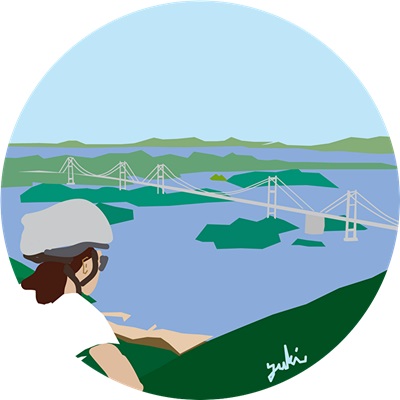
From my experience, the way you perceive the scenery on a cycling trip can change quite dramatically depending on which direction you ride.
AD (Google AdSense)
Comparing Onomichi start & Imabari start
First, I’ve created a simple comparison table so you can quickly see the differences between starting from Onomichi on the Honshu side (Hiroshima Prefecture) and starting from Imabari on the Shikoku side (Ehime Prefecture).
| Category | Start from Onomichi | Start from Imabari |
| Access | Easily accessible from mainland Honshu by Shinkansen (via Fukuyama, etc.). | Accessible via Limited Express “Shiokaze” (from Okayama), Matsuyama Airport, or the Orange Ferry. |
| Public Rental Bikes | Five public rental terminals on the Hiroshima side. | Five public rental terminals on the Ehime side. |
| Private Rental Bikes | More private rental bike options are available in Onomichi city. | Fewer private rental bike options are available in Imabari city. |
| Hill Difficulty | The most challenging section (Oshima and the Kurushima Kaikyo Bridge) comes in the later stage, when fatigue may have built up. | You can tackle the most challenging section early on, while you still have plenty of energy. |
| Wind Direction | In winter (northwesterly winds), you are more likely to have a tailwind. | From spring to autumn, you are more likely to benefit from tailwinds (west-southwesterly winds). |
| Psychological Factors | The journey begins with a short local ferry ride, which feels atmospheric. There may be some concern about stamina in the second half. The ride finishes with the dynamic Kurushima Kaikyo Bridge. | You experience the satisfaction of crossing the highest bridge early in the ride. After finishing, exploring Onomichi feels like a reward. |
| Meaning of the Journey | If you live on Honshu, it feels like “crossing to Shikoku” or “cycling to Shikoku.” | If you live on Honshu, it feels like “cycling back to Honshu from Shikoku.” |
| Souvenirs | There are many souvenir shops in Onomichi city. | There are relatively few souvenir shops around Imabari Station. |
Based on these comparisons, I’d like to take a closer look at the advantages and disadvantages of each starting point.
①: Choosing based on access
Among all Japanese travelers visiting the Shimanami Kaido, about 36% arrive mainly by train and 20% mainly by airplane. For many people, this means that JR Onomichi Station or JR Imabari Station becomes the gateway to the journey. Of course, which option feels easier will depend on where you are traveling from.
The reassurance of the “Classic” Onomichi start
![[Photo] Accessing Onomichi Station by Shinkansen and the Sanyo Main Line](https://touring-shimanami.com/wp-content/uploads/2023/09/shinkansenrinko.jpg)
The main advantage of starting from Onomichi is the convenient Shinkansen access from mainland Honshu (either transferring at Fukuyama Station or using Shin-Onomichi Station). I would say this is the classic and most popular route, especially for beginners coming from the Kanto or Kansai regions. There is a public rental bike terminal right in front of JR Onomichi Station, and just after leaving the station, you begin your journey with a short local ferry ride across to Mukaishima Island.
Imabari is not as far as it sounds
On the other hand, some people have the impression that “Shikoku is far away.” However, Imabari is actually quite accessible. You can take the Limited Express “Shiokaze” directly from Okayama Station, or use a bus connection from Matsuyama Airport. If you live in the Kansai area, the Orange Ferry from Osaka Nanko to Toyo Port in Ehime is also a comfortable and enjoyable option.
![[Photo] Taking the Yosan Line limited express Shiokaze from Okayama Station to Imabari Station](https://touring-shimanami.com/wp-content/uploads/2023/09/yosansenexpressrinkou.jpg)
There is also a public rental bike terminal in front of JR Imabari Station, and the blue line begins right outside the station. When deciding where to start, it may also help to consider how you plan to travel home after you finish your ride.

AD (Google AdSense)
②: Hill difficulty and route layout
A common comment I hear from beginners who try the Shimanami Kaido for the first time is, “I didn’t expect so many ups and downs.” Each bridge requires you to climb to a height of around 40–60 meters (130–200 feet). In addition, depending on which route you take on each island, you may encounter extra hills or avoid them.
![[Illustration] Elevation profile of the Shimanami Kaido](https://touring-shimanami.com/wp-content/uploads/2022/08/elevation-shimanami.jpg)
Here, I will assume that you are riding the “main route,” which is the standard course for those aiming to complete the entire Shimanami Kaido.

Starting from Onomichi: A climactic final stage
The longest and highest bridge on the Shimanami Kaido is the Kurushima Kaikyo Bridge on the Imabari side. In addition, Oshima Island—located closest to Shikoku—includes sections with noticeable elevation changes, such as the Miyakubo Pass. If you start from Onomichi, this most challenging section comes at the very end of your journey.
![[Photo] When starting from Onomichi, you cross the Kurushima Kaikyo Bridge at the end to reach Shikoku](https://touring-shimanami.com/wp-content/uploads/2024/12/mainandsubroute-2.jpg)
For some riders, having the biggest challenge at the end creates a powerful sense of climax. The view from the Kurushima Kaikyo Bridge in the late afternoon is breathtaking, and the idea of “cycling across to Shikoku” gives the journey a strong narrative and dramatic feeling.
Starting from Imabari: A tough but efficient beginning
If you start from Imabari, you will cross the Kurushima Kaikyo Bridge at the beginning of your ride, when your energy and motivation are still high. Personally, I think enjoying the biggest challenge and one of the most spectacular views right after you start is a smart way to keep the rest of your journey relaxed and enjoyable. If you choose the western coastal route around Oshima Island, you can ride closer to the sea. (In Japan, traffic keeps to the left.)
![[Photo] It makes a big difference to clear the toughest section while you still feel fresh](https://touring-shimanami.com/wp-content/uploads/2023/03/supring-best-shimanami.jpg)
In fact, I often hear from riders who started in Onomichi that “the stretch from the Kurushima Kaikyo Bridge to central Imabari felt especially tough.” Because the bridge itself feels like the finish line, the remaining ride into the city can start to feel like a task rather than part of the adventure. For beginners, I personally think it may be better to place the biggest challenge in the first half by starting from Imabari.
AD (Google AdSense)
③: Wind direction and choosing a rental bike
Is Imabari more likely to have a tailwind?
Wind direction is an important factor in any cycling trip. Among those who recommend starting from Imabari, it is often said that you are more likely to benefit from a tailwind with a west-southwesterly wind. However, from late autumn to winter, strong northwesterly seasonal winds are common. In that case, starting from Imabari can mean riding directly into a powerful headwind.
![[Illustration] Shimanami Kaido Starting Point: Wind direction is influenced by terrain and pressure systems](https://touring-shimanami.com/wp-content/uploads/2025/06/windshimanami-1024x730.png)
The islands’ terrain and ocean currents are quite complex, so regardless of which direction you start, it is rare to have a tailwind the entire way. Rather than assuming “Imabari start = always a tailwind,” it is important to check the wind forecast in advance.

Differences in rental bike options
Regarding rental bikes, about 45% of all cycling travelers use the public rental cycle system. If you use this system, there is little difference between starting points. There are five terminals on the Hiroshima side and five on the Ehime side, and both JR Onomichi Station and JR Imabari Station have rental terminals located in front of the stations.
![[Illustration] Shimanami Kaido Starting Point: Map showing public rental cycle terminals](https://touring-shimanami.com/wp-content/uploads/2025/06/rentalbikemap-e.png)
On the other hand, there are significantly more private rental bike options in Onomichi City. If you are considering using private rental shops such as Red Bicycles Onomichi, Onomichi Base, or Better Bicycles, starting from Onomichi is recommended. For those who want to rent a high-performance road bike or carefully choose their bicycle, Onomichi is the better starting point.

AD (Google AdSense)
Motivation and rewards after the finish
If you’re the emotional type, start from Onomichi
For those living on Honshu, the meaning of the journey changes slightly depending on where you start. Starting from Onomichi creates an exciting image of “cycling all the way to Shikoku,” while starting from Imabari gives a sense of accomplishment—“cycling back to Honshu from Shikoku.”
![[Photo] Shimanami Kaido Starting Point: A story of crossing the Seto Inland Sea islands and landing in Shikoku](https://touring-shimanami.com/wp-content/uploads/2024/11/kirousanbike.jpg)
You take a ferry to Mukaishima, gradually cross each island, and finally ride over a massive bridge into Shikoku. There’s a real narrative to the journey. If the phrase “cycling across to Shikoku” excites you, starting from Onomichi is very appealing. It’s perfect for those who want to place a big sense of achievement at the end of their trip.
If you’re the logical type, start from Imabari
A major advantage of starting from Imabari is the dynamic beginning: as soon as you leave the station and follow the Blue Line, you quickly approach the enormous Kurushima Kaikyo Bridge. It brings your motivation to a peak right at the start of the journey. You can cross the largest bridge while your energy levels are still high, factor in typical wind patterns, and increase your chances of completing the route. It’s a rational approach.
![[Photo] Shimanami Kaido Starting Point: Onomichi, the goal, is one of Hiroshima’s leading tourist destinations](https://touring-shimanami.com/wp-content/uploads/2023/08/senkoji-ovs-peak-19.jpg)
As a finishing point, Onomichi is a charming tourist city packed with cafés, great food, and retro streetscapes. After completing your ride and taking the ferry back to Honshu, you can leisurely explore the town or celebrate your achievement. That sense of “I did it!” makes wandering around Onomichi a wonderful reward. You can also enjoy spectacular views from Senkoji Temple, delicious coffee, and craft beer.
If you want to buy souvenirs before heading home
There are only a few souvenir shops in front of Imabari Station. In contrast, the tourist city of Onomichi has many more options. During a cycling trip, it’s difficult to carry souvenirs with you for long distances, and there’s a limit to how much you can pack. Being able to buy souvenirs after finishing your ride in Onomichi can make a bigger difference than you might expect. On the other hand, if you finish in Imabari and plan to visit Matsuyama or the Dogo Onsen area afterward, you’ll find plenty of souvenir options there as well.

Maps you should get in advance
“CycloTourisme Shimanami,” which has been active in cycle tourism and regional promotion for nearly 20 years along the Shimanami Kaido, publishes guidebooks and maps. The map is also available in English and is extremely popular because it is the most detailed cycling-specific map in this region.
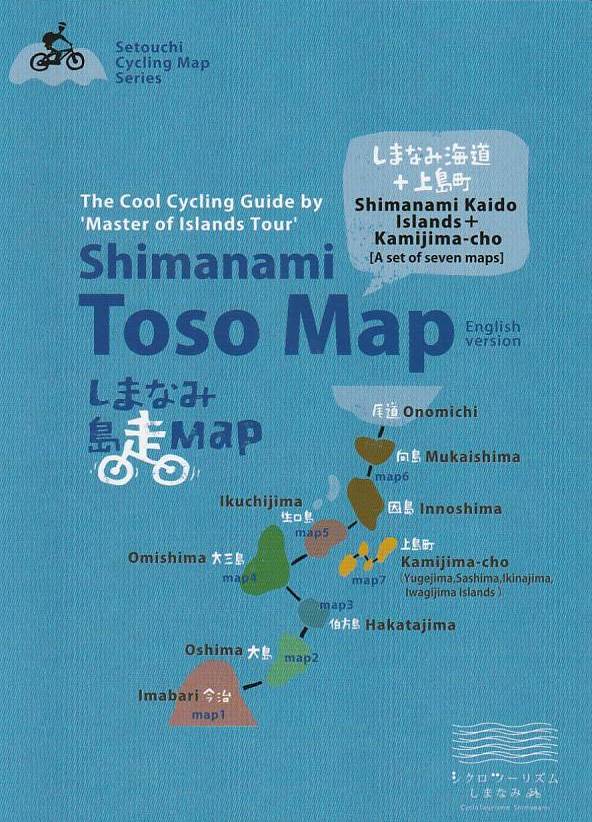
This product comes with a set of seven maps, each with a fairly detailed map for each island. I believe that getting your hands on this map will change your experience here. It can be purchased on Amazon.co.jp, and you can also buy it locally at Guesthouse CYCLONOIE in front of Imabari Station.
Conclusion
I’ve compared various aspects so far, but there is no strict rule that says you absolutely must choose one over the other. Each route has its own unique appeal and charm.
However, as one suggestion to help beginners enjoy the spectacular cycling experience smoothly and with a smile until the very end, I personally recommend starting from Imabari for objective reasons such as hills and wind conditions. Being able to conquer the biggest challenge while you still have plenty of energy gives you peace of mind, which in turn allows you to relax and fully appreciate the scenery.
On the other hand, for those who value atmosphere and a more dramatic travel story, starting from Onomichi has an undeniable charm. Choose the option that best matches your fitness level and travel style, and plan a trip that is both comfortable and enjoyable.
On this page, I explored in detail whether you should start the Shimanami Kaido from Onomichi or Imabari. One of the greatest features of the Shimanami Kaido is that even beginners can enjoy cycling with confidence. For more detailed information about cycling the Shimanami Kaido, please check the page below.