
![[Title] 2019 vs 2024: Country-by-Country Statistics on Inbound Cycling Tourism on the Shimanami Kaido](https://touring-shimanami.com/wp-content/uploads/2026/02/datae-ogp.png)
Using bicycle traffic counts and country-by-country usage data from the public rental cycle system, I explore the increase in international cyclists visiting the Shimanami Kaido and the factors behind it. By comparing data from 2019 and 2024, I offer my own interpretation of how travel styles have changed and what these shifts may mean for the local area.

Hi, I’m Yuki KAWAI — a touring cyclist based along the Shimanami Kaido. Having cycled this route more than 300 times, I created this site to share practical, experience-based tips for anyone planning a cycling trip here. I hope it helps you make the most of one of Japan’s most beloved cycling destinations.
Analyzing country-by-country data
Why look at country-specific data now?
The Shimanami Kaido has become a destination not only for cyclists from across Japan, but also for a growing number of visitors from overseas. When I ride here myself, I truly notice how often I encounter international cyclists. At rental cycle terminals, on the bridges, and in island cafés and accommodations, hearing different languages has become a completely familiar part of everyday life.
![[Photo] Changes in international travelers: visitors from overseas can be seen all across the islands](https://touring-shimanami.com/wp-content/uploads/2024/07/innoshima-jitensya.jpg)
Comments like “There seem to be more international visitors lately” or “You see a lot of people from Europe and North America these days” are often shared as casual impressions. However, I feel that it is surprisingly rare to talk in concrete terms about “which countries people are coming from, how many there are, and how they are actually riding the Shimanami Kaido.” Opportunities to look at this situation through real data are not so common.
![[Graph] Number of public bicycle rentals on the Shimanami Kaido by foreigners and Japanese (2012 to 2024)](https://touring-shimanami.com/wp-content/uploads/2026/02/graph4-e-1.png)
This analysis is mainly intended as a reference for people who are currently running businesses along the Shimanami Kaido, those considering new ventures here, and anyone involved in cycle tourism in this or other regions. In fact, the multilingual development of my own website is also guided not only by personal impressions, but by insights drawn from data like this.
Note: The years shown on this page (such as 2019 or 2024) refer to the Japanese fiscal year. In Japan, a fiscal year runs from April to March of the following year, and all figures and analysis in this article are based on this period.

2019 vs 2024
In this article, I focus on changes in overseas cycling travelers by examining data such as bicycle traffic counts on the Shimanami Kaido and usage records from the public rental cycle system. I see the COVID-19 period as a major turning point, and by comparing fiscal year 2019 with the most recent data from fiscal year 2024, I would like to explore what kinds of differences have emerged by country and by travel style.
- By fiscal year 2024, numbers had recovered to pre-pandemic levels.
- The share of international visitors increased dramatically, from about one in six to roughly one in three.
- A clear shift in country composition, from Asia toward Europe, North America, and Oceania.
The data used here has been compiled and reorganized by me from publicly available sources, including the Shimanami Japan Association, the official website of Ehime Prefecture (Cycling New Culture Promotion Division), and the Honshu–Shikoku Bridge Expressway Company (JB Honshi Expressway).
AD (Google AdSense)
Bicycle traffic volume and rental cycle usage
Total number of bicycles using the Shimanami Kaido
First, let’s look at a comparison between the total number of bicycles using the Shimanami Kaido and the number of public rental cycles in use.
![[Graph] Total bicycle traffic and public rental cycle usage: 2019 vs 2024](https://touring-shimanami.com/wp-content/uploads/2026/02/graph1-e.png)
In fiscal year 2019, the total number of bicycles using the Shimanami Kaido was approximately 335,000. Of these, public rental cycles accounted for about 149,000 uses, representing roughly 44.5% of the total. In contrast, in fiscal year 2024, the total number of bicycle trips was around 330,000-340,000. Public rental cycle usage stood at about 136,000, making up approximately 40% of the total—a slight decrease in share.
| Category | 2019 | 2024 |
|---|---|---|
| Total bicycle traffic (overall)* | Approx. 335,000 trips | 330,000 – 340,000 |
| Public rental cycles | 149,365 trips | 135,735 trips |
*There are various theories about the estimated total number of vehicles passing through, depending on the estimation method.
While the difference is not large, looking purely at the numbers suggests a gradual increase in the proportion of cyclists riding without using the public rental system. This may reflect a rise in travelers bringing and riding their own bicycles, but it could also be influenced by the growing availability of private rental cycle services. From my perspective, both factors are likely playing a role.
![[Photo] Changes in international travelers: private rental cycle services are also becoming more established](https://touring-shimanami.com/wp-content/uploads/2023/09/onomichi-2-22.jpg)
The convenience of private rental cycle services has been improving, and the number of operators has also increased. Services such as “Onomichi Base,” which now allow one-way cycling trips, are a good example. In the past, public rental cycles were virtually the only realistic option for beginners or first-time visitors. Today, however, travel needs have become more diverse, and a wider range of rental cycle services now supports cycling on the Shimanami Kaido.

The increase in international travelers
In fiscal year 2019, Japan was experiencing a domestic leisure boom, and many Japanese families and groups enjoyed casual cycling trips using the public rental system. Around this time, the Shimanami Kaido began to be widely recognized not only as a destination for serious cyclists, but also as a place “anyone can enjoy once they go.” It was also a year when inbound tourism to Japan reached 31.88 million visitors, marking the eighth consecutive year of record growth.
| Public Rental Cycle Users | 2019 | 2024 |
|---|---|---|
| Total rentals | 149,365 | 135,735 |
| International users | 23,547 | 43,841 |
| Japanese users | 125,818 | 91,891 |
By contrast, in fiscal year 2024, casual domestic use by Japanese visitors has eased somewhat, influenced by rising prices in Japan and a wider range of leisure and entertainment options. At the same time, one trend that is clearly visible is the increase in international travelers. The number of public rental cycle users from overseas has grown significantly—about 1.9 times higher than in fiscal year 2019.
![[Graph] Breakdown of public rental cycle users (2019 vs 2024)](https://touring-shimanami.com/wp-content/uploads/2026/02/graph2-e.png)
Visitors from overseas—particularly from Europe, North America, and other Western countries—tend to enjoy taking “detours” more than Japanese cyclists. In other words, rather than simply riding from bridge to bridge, many choose to explore full island loops, stay overnight, and enjoy local food while covering longer distances. This suggests that each traveler may be spending more time in the Shimanami region overall. These are aspects that cannot be fully captured by traffic counts alone, which is why on-the-ground observation and traveler surveys are also important.
![[Photo] Changes in international travelers: cycling-friendly accommodations continue to open](https://touring-shimanami.com/wp-content/uploads/2024/08/ikuchi-hostel-1.jpg)
In fact, new accommodation options have been opening one after another on islands such as Ikuchijima and Omishima. From my perspective, I see this trend positively, as it suggests that more visitor spending is staying within the island communities themselves.
A return to pre-pandemic levels
Even so, the fact that traffic volumes have largely returned to pre-pandemic levels is significant. During the height of the COVID-19 pandemic in fiscal year 2020, the total number of bicycles using the route dropped sharply—from about 335,000 in the previous year to around 175,000—representing a decline of nearly 50%.
| 2019 vs 2020 | 2019 | 2020 | Year-on-Year |
|---|---|---|---|
| Total bicycle traffic | Approx. 335,000 | Approx. 175,000 | 52% |
| Public rental cycles | 149,365 | 74,913 | 50% |
| Private bikes & private rentals | Approx. 186,000 | Approx. 100,000 | 54% |
At that point, traffic levels temporarily fell back to what they had been around 2011–2012, a time when the Shimanami Kaido was still relatively unknown to the general public. From there, it took another four to five years for bicycle traffic to finally recover to pre-pandemic levels.
![[Graph] Graph of the number of rental bicycles on the Shimanami Kaido (1999 to 2020)](https://touring-shimanami.com/wp-content/uploads/2026/02/graph4-e.png)
Next, I turn to the data broken down by country. Interestingly, when comparing 2019 and 2024, clear shifts can be seen in the country-level trends. I consider this to be particularly important data for understanding who the Shimanami Kaido is reaching—and who it may reach in the future.
AD (Google AdSense)
Changes in international visitors seen through country-level data
2019: Taiwan and Hong Kong
In fiscal year 2019, the total number of international users of the public rental cycle system was 23,547. The largest group came from Taiwan, with around 2,700 users, accounting for just over 10% of the total. This was followed by Australia, the United States, France, and the United Kingdom—countries from Europe, North America, and Oceania. Taken together, the top ten countries accounted for roughly 70% of all international users. At the time, Ehime Prefecture was also actively promoting cycling tourism in Taiwan, partly influenced by its sister relationship with Sun Moon Lake.
| Rank (FY 2019) | Country / Region | Users | Share |
|---|---|---|---|
| 1 | Taiwan | 2,749 | 11.7% |
| 2 | Australia | 2,217 | 9.4% |
| 3 | United States | 2,172 | 9.2% |
| 4 | France | 1,933 | 8.2% |
| 5 | Hong Kong | 1,907 | 8.1% |
| 6 | United Kingdom | 1,889 | 8.0% |
| 7 | Germany | 1,504 | 6.4% |
| 8 | Netherlands | 1,057 | 4.5% |
| 9 | Canada | 974 | 4.1% |
| 10 | China | 825 | 3.5% |
| – | Others | 6,320 | 26.8% |
At this stage, nearby Asian regions such as Taiwan and Hong Kong had a slight edge, but there was no heavy concentration in any single country. Instead, the overall picture was relatively well distributed, including visitors from Europe, North America, and Oceania. While the Shimanami Kaido was already becoming known among cycling enthusiasts visiting Japan, it had not yet fully reached the broader group of general travelers.
2024: The United States and Europe
By FY2024, the number of international users had increased to 43,841—approximately 1.9 times higher than in FY2019. The United States stands out in particular, with around 7,200 users, accounting for more than 16% of the total and ranking first by a clear margin. Australia also remains among the top countries, with approximately 4,700 users.
| Rank (FY2024) | Country / Region | Number of Rentals (Users) | Share | Year-on-Year Trend |
|---|---|---|---|---|
| 1 | United States | 7,233 | 16.5% | ↑ Increased (clear lead) |
| 2 | Australia | 4,734 | 10.8% | ↑ Increased |
| 3 | France | 3,901 | 8.9% | → Stable |
| 4 | United Kingdom | 3,814 | 8.7% | → Stable |
| 5 | Germany | 3,682 | 8.4% | → Stable |
| 6 | Taiwan | 2,586 | 5.9% | ↓ Slight decrease in share |
| 7 | China | 2,148 | 4.9% | ↑ Increased |
| 8 | Canada | 1,841 | 4.2% | ↑ Increased |
| 9 | Hong Kong | 1,753 | 4.0% | → Flat |
| 10 | Netherlands | 1,227 | 2.8% | ↑ Increased |
| – | Other | 10,922 | 24.9% | Increasing diversity of nationalities |
European countries such as France, the United Kingdom, and Germany each recorded figures in the high 3,000s, highlighting the growing presence of visitors from Europe, North America, and Australia as a whole. Meanwhile, although the number of users from Taiwan has remained relatively stable in absolute terms, its share of the total has declined to just under 6%.
![[Graph] Share of public rental bicycle users by country (2019 vs 2024)](https://touring-shimanami.com/wp-content/uploads/2026/02/graph3-e.png)
This trend also matches my own experience from cycling the Shimanami Kaido. While there are certainly many travelers from Asia, I have a strong impression that visitors from Europe, North America, and Australia have become much more noticeable in recent years. In everyday encounters along the route, I now hear English, German, and French far more often than Chinese or Korean.
What the changes in the numbers suggest
Both the data and my personal observations suggest that this shift in country composition is better understood not as “a decline in Asia,” but rather as “strong growth from Europe, North America, and Australia.” In fact, in FY2024, the category labeled “Other” accounts for roughly 25% of users, indicating that the Shimanami Kaido is increasingly being chosen by travelers from a wider range of countries and regions.
| Item | Japanese : International | Notes |
|---|---|---|
| FY2019 | 5 : 1 | 1 out of every 6 rentals by international users |
| FY2024 | 2 : 1 | 1 out of every 3 rentals by international users |
If FY2019 can be described as a stage when the route was “beginning to be widely known,” then FY2024 may represent a stage where it has “clearly reached a global audience.” This is likely due not only to promotional efforts by Ehime and Hiroshima prefectures aimed at visitors from Europe, North America, and Australia, but also to broader changes in the overall composition of travelers visiting Japan. As more visitors come from countries with strong cycling cultures, it is reasonable to expect that more of them will choose the Shimanami Kaido as part of their journey.
Different countries, different travel styles
Growing awareness of convenient rental bicycles
In FY2019, around 23,500 international visitors used public rental bicycles. By FY2024, this number had grown to approximately 43,800. While the total number of cyclists and overall rental bicycle usage has not increased dramatically, the number of international users alone has risen by about 1.8 times. I see this as a sign that the Shimanami Kaido is increasingly recognized by international travelers as a leisure cycling route that can be enjoyed easily with rental bicycles.
| Item | FY2019 | FY2024 |
|---|---|---|
| Public rental bicycles | 149,365 | 135,735 |
| of which international users | 23,547 | 43,681 |
In the past, bringing a bicycle from overseas involved significant hurdles, and riding long distances required careful preparation and advance research. Today, however, improvements such as easier reservations, multilingual support, and flexible return locations have made the route more accessible. As a result, the Shimanami Kaido is now widely recognized as a place where travelers can ride even without bringing their own bicycle. This has helped ensure that practical information is reaching first-time visitors, including general tourists and backpackers.
![[Photo] Changes among international cyclists: many now take multi-day tours](https://touring-shimanami.com/wp-content/uploads/2023/11/touringbike.jpg)
These changes are also visible in the way international cyclists travel on the route. Compared to those who ride only for a few hours, more people now carry luggage and cycle over several days, placing greater value on scenery and stopping along the way rather than speed. Even when using rental bicycles, many appear to be seeking a more immersive and authentic cycling experience.
Travel styles vary by region
Travel styles also appear to differ by country and region. Looking at reviews on platforms such as TripAdvisor, visitors from Europe, North America, and Australia often allow themselves more time and travel to the Shimanami Kaido with the route itself as a main destination. In contrast, travelers from East Asia more frequently include it as one stop within a broader itinerary across Japan, resulting in shorter riding distances and more compact stays. These differences may be reflected in the country-by-country composition of visitors and in patterns of rental bicycle use.
![[Photo] Changes among international visitors: public rental bicycles are now fully supported in English](https://touring-shimanami.com/wp-content/uploads/2025/11/onomichist-rt-2.jpg)
The increase in rental bicycle use is not simply a matter of improved convenience. It also reflects a broader shift in how the Shimanami Kaido is perceived—from a “special place” that required dedicated equipment and experience to a cycling route that can be naturally chosen as part of an ordinary trip. In the next section, I would like to share my own thoughts on why these changes may be taking place.
AD (Google AdSense)
Why visitors from Europe and US have increased
Trends among travelers from Europe, North America, and Australia
When comparing the country-by-country data from fiscal year 2019 and fiscal year 2024, it is clear that the number of users from Europe, North America, and Australia has increased significantly. This shift cannot be explained by a single factor; rather, it appears to be the result of several overlapping trends.
| Country Ranking | FY2019 | FY2024 |
|---|---|---|
| 1 | Taiwan | United States |
| 2 | Australia | Australia |
| 3 | United States | France |
| 4 | France | United Kingdom |
| 5 | Hong Kong | Germany |
One major factor is the growth of the Europe, North America, and Australia market itself. The Shimanami Kaido has long been known among international cycling enthusiasts, but in recent years its reputation has shifted from a destination “for dedicated cyclists” to one that is recognized globally. In addition to being selected by CNN as one of the “most incredible cycling routes in the world,” it was also featured by The New York Times as one of the “52 Places to Go in 2024.” Continued coverage by major English-language media outlets appears to have given many travelers a clear motivation: “If I’m going to Japan, I want to cycle the Shimanami Kaido.”
![[Photo] Changes among international visitors: a growing emphasis on active experiences connected with nature and local communities](https://touring-shimanami.com/wp-content/uploads/2023/10/mountainbike-view-2.jpg)
In addition, independent travelers from Europe, North America, and Australia tend to spend longer periods in Japan. Their travel style increasingly values not only visiting famous sights such as temples and shrines, but also engaging physically with nature and local communities. These regions also have well-established cycling cultures. The Shimanami Kaido—combining cycling with the scenic beauty of the Seto Inland Sea—fits extremely well with these values, and I feel that its growing popularity reflects a natural alignment with this broader trend.
In addition, the impact of the weaker yen cannot be overlooked. Since around 2022, the cost of traveling in Japan has become relatively lower for visitors from Europe, North America, and Australia, making it easier to plan longer and more flexible trips. After following the classic routes of Tokyo, Kyoto, and Osaka, many travelers begin to look for experiences that feel “more local” or take them to less crowded regions. This trend can also be seen in the growing popularity of the Shikoku Pilgrimage among Western travelers. Against this backdrop, the Shimanami Kaido is increasingly being chosen as a destination in its own right—one where the act of cycling itself is the main purpose of the journey.
Changes among Japanese riders
At the same time, changes among Japanese riders have also had a noticeable impact on the overall makeup of users. Rising prices and increasingly hot summers appear to have reduced participation among more casual riders, particularly those who previously enjoyed cycling as a light, short-distance leisure activity. The decline in this group—especially among users of public rental bicycles—seems to be influencing both total traffic numbers and overall usage ratios.
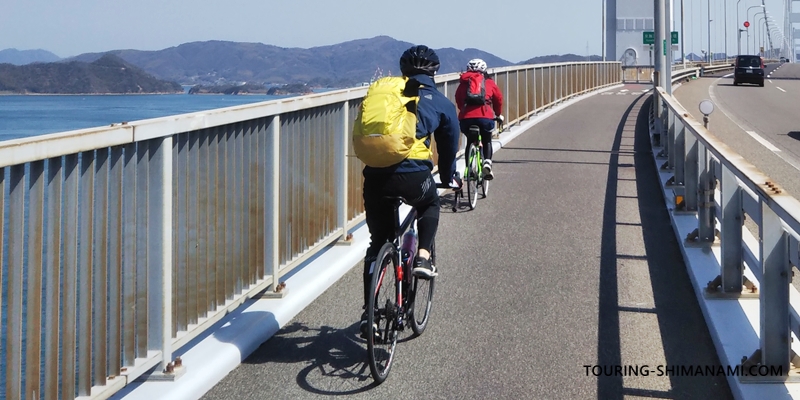
Compared with Europe and North America, cycling in Japan is not yet a widely established leisure activity. For this reason, it is important to provide beginner-friendly routes, reasonable distance options, and clear information for those trying public rental bicycles for the first time, helping them take their first step into the world of cycling. At the same time, for more experienced riders traveling with their own bikes, creating reasons to return—such as new routes or deeper local experiences—becomes increasingly important.
As the number of international visitors continues to grow, approaches and businesses designed solely with Japanese users in mind may struggle to keep pace with these changes. Clarifying who the primary target audiences are, and what kind of experiences should be offered to each group, is becoming essential in order to maintain a healthy overall balance.
One of the Shimanami Kaido’s greatest strengths is that it can be enjoyed by a wide range of people—from beginners to experienced cyclists, and from both Japan and overseas—along the same route. Making the most of this diversity, while offering appropriate support and suggestions for each type of rider, will be a key perspective for the future of cycling on the Shimanami Kaido.
AD (Google AdSense)
The future of the Shimanami Kaido
Toward a sustainable tourism route
Looking at traffic volumes and rental bicycle usage data, I feel that cycling on the Shimanami Kaido is changing not only in terms of numbers, but also in how it is enjoyed. In the past, the typical image of Shimanami Kaido cycling was simple and clear: “ride from Onomichi to Imabari” and “complete the entire route.”
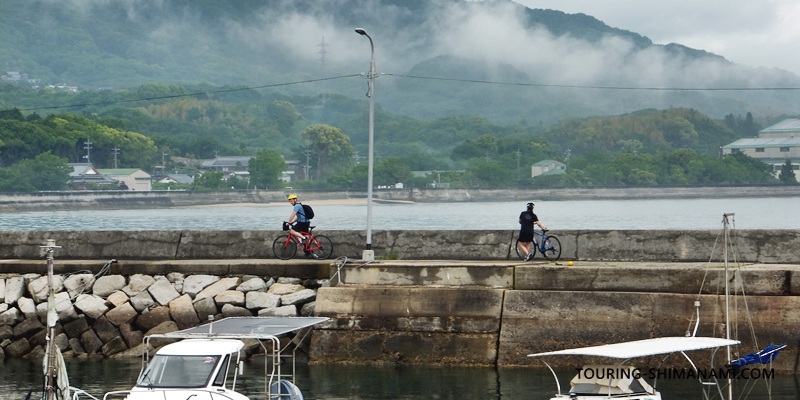
That idea still forms the foundation today, but as the mix of travelers has changed, the ways of enjoying the route have diversified and expanded into a more flexible style of cycling. Some people use public rental bicycles to ride around an island for just a few hours. Others focus on scenic sections with electric-assist bikes. Some travelers choose a single base for accommodation and ride different islands each day. Others stay in the area for more than a week.
Compared with Japanese travelers, who often find it difficult to take long consecutive holidays, visitors from overseas—especially from Europe, North America, and Australia—tend to stay in Japan longer and enjoy greater flexibility in both itinerary and destinations. As these traveler characteristics change, factors such as which roads people choose to cycle, where they stay overnight, and what kinds of experiences interest them also change significantly.
With this level of growth in international visitors, focusing solely on Japanese travelers is no longer enough to meet rapidly evolving needs. Along the Shimanami Kaido, many new shops and facilities have recently opened, or are planning to open soon, and diversity on the service-provider side is increasing just as quickly. I believe that promotion and marketing efforts that properly understand and reflect the diversity of target audiences are becoming increasingly important.
Actions based on an understanding of diversity
For example, on my website I often suggest to beginner cyclists that “it’s best to spend two days or more on the Shimanami Kaido.” This advice is meant to encourage longer stays and a more relaxed cycling experience. At the same time, however, it can unintentionally narrow the audience by implying that the Shimanami Kaido cannot be enjoyed unless you have at least two days. That is why it is also important to consider travelers with limited time and say, “Here are some routes you can enjoy in half a day or one day.”
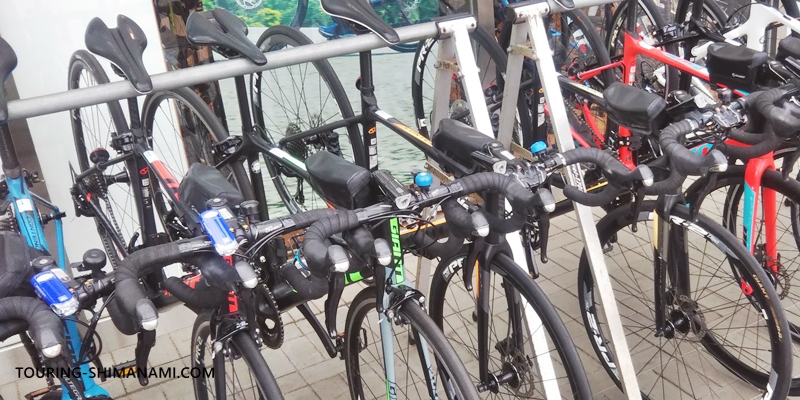
In administrative initiatives related to Shimanami Kaido cycling, there also seemed to be, especially in the beginning, a rather stereotypical image of “cyclists” as “road bike enthusiasts.” As a result, many promotions and projects were geared toward experienced riders. One of the strengths of the Shimanami Kaido, however, is that it offers an environment where everyone—from beginners to advanced cyclists—can enjoy cycling. I feel that understanding of these diverse target groups has progressed rapidly over the past few years.
From my own experience interacting with cyclists on the islands, I sense that more people now place greater value on “how they spend their time” rather than on “how far or how fast they ride.” Within limited time, they want to enjoy the destination without pushing themselves—taking in the scenery, having conversations at places they stop by, and making small, spontaneous detours. I believe it is these moments that truly shape the impression of a journey.
There are things that numbers and data alone cannot reveal, because behind them lies each person’s unique style of travel. The Shimanami Kaido is gradually shifting away from being a place where the goal is simply “to ride all the way through,” toward becoming a place where people can “spend time at their own pace.” I feel this change shows that the ways to enjoy the Shimanami Kaido are becoming more diverse and more open to everyone.
Latest data: Public bicycle rental figures by country and region for FY2025
In this article, I compared data from FY2019 and FY2024. As the latest update, I would like to add the figures for public bicycle rentals by country and region for FY2025 (April 1, 2025, to March 31, 2026).
| Rank (FY2025) | Country or region | Number of rentals | Share |
|---|---|---|---|
| 1 | United States | 11,033 | 14.1% |
| 2 | Australia | 6,708 | 8.5% |
| 3 | United Kingdom | 6,670 | 8.5% |
| 4 | Germany | 6,278 | 8.0% |
| 5 | Taiwan | 5,634 | 7.2% |
| 6 | France | 5,491 | 7.0% |
| 7 | Canada | 5,218 | 6.7% |
| 8 | China | 3,745 | 4.8% |
| 9 | Netherlands | 3,420 | 4.4% |
| 10 | Switzerland | 1,816 | 2.3% |
| – | Other countries and regions | 22,447 | 28.6% |
The overall trends remain broadly similar to those seen in FY2024. The total number of public bicycle rentals increased from 135,735 in FY2024 to 173,279 in FY2025. Rentals by international visitors also rose, from 43,681 to 74,146. As a result, the number of rentals by visitors from individual countries and regions has also increased. I will continue to keep an eye on statistics like these for the Shimanami Kaido and share updates on relevant topics in the future.
Summary
• The number of cyclists using the Shimanami Kaido in fiscal year 2024 has almost returned to pre-pandemic levels.
• In fiscal year 2019, most international cyclists came from Taiwan and Hong Kong, but by fiscal year 2024 there was a sharp increase in visitors from Europe, North America, and Australia, with the United States in particular standing out.
• While the total number of rental bicycles has not increased significantly, usage by international travelers has risen rapidly.
• Due to rising prices and the growing variety of entertainment options, the number and proportion of domestic Japanese travelers appear to be on a gradual decline.
• Changes in countries and regions of origin are leading to a wider variety of travel styles and ways of enjoying the route.
• By accurately understanding diverse styles, preferences, and trends, it becomes possible to create a tourism route that is sustainable and appealing over the long term.
This page has explored country-by-country statistical data on inbound travelers cycling the Shimanami Kaido. One of the route’s great attractions is that it offers different ways to enjoy cycling throughout the year, depending on the season. For those planning their first Shimanami Kaido cycling trip, I provide a thorough and easy-to-understand guide on the page below, so please take a look for more detailed information.