
Is it really raining every single day on Shimanami Kaido during the rainy season? Using weather data from 2022 to 2025, I analyzed the rainfall, sunshine hours, and wind conditions in June and July. I’ll also share the highlights of cycling during this season, what to watch out for, and how to make the most of a rainy day.
Hi, I’m Yuki KAWAI — a touring cyclist based along the Shimanami Kaido. Having cycled this route more than 300 times, I created this site to share practical, experience-based tips for anyone planning a cycling trip here. I hope it helps you make the most of one of Japan’s most beloved cycling destinations.
- The rainy season (tsuyu) was officially declared to have ended in the Shikoku region on July 12, 2026.
- The rainy season was officially declared to have ended in the Chugoku region on July 8, 2026.
- Tsuyu: Can You Still Cycle During Japan's Rainy Season?
- When Does the Rainy Season Start and End?
- What the Data Tells Us About Cycling During Tsuyu
- The Appeal of Cycling Shimanami Kaido During Tsuyu
- Practical Tips for Cycling During the Rainy Season
- Flexible Travel: Going With the Weather
- Tsuyu on Shimanami Kaido: It All Comes Down to Planning
- Reference: Rainy season data for the Shimanami Kaido
Tsuyu: Can You Still Cycle During Japan’s Rainy Season?
If you’re planning a trip to Japan, you may have already heard of tsuyu — the rainy season. Japan is an island nation in East Asia where the weather tends to become unsettled during seasonal transitions — most notably the shift from spring into summer. The rainy period between spring and summer is known as tsuyu (梅雨), which literally means “plum rain,” as it coincides with the ripening of Japanese plums.
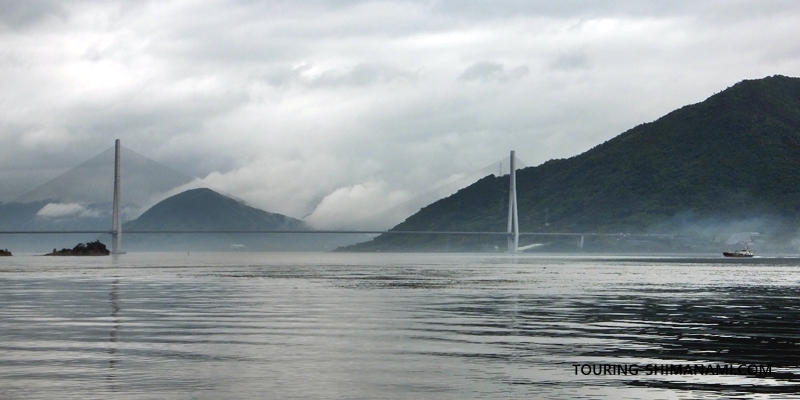
If you’re considering a trip in June or July, you may not have a clear sense of how much rain tsuyu actually brings. Some people may feel anxious, wondering: “I want to visit Shimanami Kaido, but will it be raining every single day during tsuyu?”
It’s true that the Seto Inland Sea area, where Shimanami Kaido is located, does receive periods of rain during the rainy season. However, living here myself, my personal sense is that there are actually quite a few dry days — more than enough opportunities to get out and ride.
- The timing and duration of the rainy season in the Shimanami Kaido area
- Rainy season characteristics based on weather data
- How to enjoy cycling the Shimanami Kaido during the rainy season
In this article, I’ll share an analysis of Shimanami Kaido’s weather during the rainy season, based on data from the Japan Meteorological Agency (JMA) covering 2022 to 2025. Cycling during tsuyu does call for some preparation and flexibility when it comes to rain. That said, with the right mindset and a few precautions, there’s a real charm to traveling in this season that I think is worth exploring.
Please keep in mind that all figures are based on historical data and are intended as a general reference — not a guarantee of future weather conditions.
AD (Google AdSense)
When Does the Rainy Season Start and End?
Typical Onset and End Dates
Shimanami Kaido spans two prefectures: Ehime Prefecture (part of the Shikoku region) and Hiroshima Prefecture (part of the Chugoku region). Rainy season announcements are made separately for each region, but in practice the two areas tend to enter and exit tsuyu at nearly the same time. Here is a summary of the rainy season start and end dates from 2022 to 2025.
| Year | Shikoku region onset | Shikoku region end | Chugoku region onset | Chugoku region end |
|---|---|---|---|---|
| 2022 | June 11 | July 22 | June 14 | July 24 |
| 2023 | May 29 | July 16 | May 29 | July 16 |
| 2024 | June 17 | July 17 | June 20 | July 21 |
| 2025 | June 8 | June 27 | June 9 | June 27 |
| 2026 | June 2 | July 12 | June 4 | July 8 |
Looking at the data, the rainy season generally begins around early June and ends sometime between mid and late July — though there’s considerable variation year to year. In 2023, for example, tsuyu arrived as early as late May, while in 2025, the season ended as early as late June. The JMA publishes official rainy season forecasts each year, so I’d recommend checking for the latest updates closer to your travel dates.
What the Data Tells Us About Cycling During Tsuyu
More Dry Days Than You’d Expect — and Sunny Breaks, Too
Many people picture a rainy season as one long stretch of non-stop rain. Unlike the intense, short-lived tropical downpours you might experience in Southeast Asia, the rainy seasons in Japan, South Korea, and Taiwan are typically characterized by lighter, more persistent rainfall. Like most people, I’d always associated this time of year with gray, drizzly days — but when I actually looked at the data, a different picture emerged.
Looking at data from multiple locations across the 2022–2025 rainy seasons, I found that days with no rainfall at all (0 mm) accounted for roughly half to two-thirds of the total days in the rainy season period. In other words, even during tsuyu, there are actually quite a few days of clear or cloudy skies when cycling is perfectly possible.
| Year | Rainy season length | No rain (clear/cloudy) | Light rain (up to 29 mm/day) | Heavy rain (30 mm+/day) |
| 2022 | Approx. 41–42 days | Approx. 24 days (57%) | Approx. 15 days (37%) | Approx. 3 days (6%) |
| 2023 | Approx. 49 days | Approx. 26 days (53%) | Approx. 19 days (39%) | Approx. 4–5 days (8%) |
| 2024 | Approx. 31–32 days | Approx. 16 days (51%) | Approx. 11 days (34%) | Approx. 5 days (15%) |
| 2025 | Approx. 19–20 days | Approx. 9 days (45%) | Approx. 9 days (45%) | Approx. 2–3 days (10%) |
The data also revealed something that surprised me: even within the rainy season, there were multiple days at various locations where sunshine hours reached 8 to 13 hours. The skies don’t stay gray the whole time — there are genuine sunny breaks when the light really pours in. In early July 2024, for instance — still well within the rainy season — some locations recorded 12 to 13 hours of sunshine. I think it’s definitely worth planning your cycling around those clear windows.
That said, days with “heavy rain” (total daily rainfall of 30 mm or more) do occur — around 3 to 5 days per location during the rainy season. On those days, visibility drops and roads become slippery, increasing the risks. Keeping a close eye on the weather forecast and planning without overcommitting is really important.
Rainfall Differs Between the Shikoku and Hiroshima Sides
One thing that surprised me in the data analysis was the difference in rainfall between the Shikoku (Ehime) side and the Hiroshima (Chugoku) side of Shimanami Kaido during the rainy season. Based on four years of data, Imabari and Omishima on the Shikoku side consistently received higher total rainfall than Ikuchijima (Setoda) and Fukuyama on the Hiroshima side. Imabari in particular had the highest total rainfall of the four locations, and tended to see heavier rain on wet days — in some years, a single day’s rainfall exceeded 100 mm.
Total rainfall during rainy season
| Year | Shikoku side (avg. of Imabari & Omishima) | Hiroshima side (avg. of Ikuchijima & Fukuyama) |
| 2022 | Approx. 277 mm | Approx. 199 mm |
| 2023 | Approx. 398 mm | Approx. 312 mm |
| 2024 | Approx. 438 mm | Approx. 354 mm |
| 2025 | Approx. 195 mm | Approx. 142 mm |
On the other hand, Fukuyama — the closest major weather station to Onomichi — had the lowest total rainfall of the four locations and tended to have more dry days overall. While intense rain can still occur toward the end of the rainy season in July, the Hiroshima side generally sees less rainfall than the Ehime side.
Of course, day-to-day conditions depend on the actual forecast. But keeping this general tendency in mind might help when planning your itinerary. For example, if the forecast shows rain concentrated on the Ehime side, you might consider focusing your cycling on the Hiroshima side instead, where conditions tend to be drier. I’ve put together a standard two-day cycling itinerary for Shimanami Kaido on this page.

The half-route from Onomichi to Setoda on Ikuchijima is a popular one-day itinerary among visitors.
AD (Google AdSense)
The Appeal of Cycling Shimanami Kaido During Tsuyu
Fewer Crowds, Quieter Islands, Your Own Pace
The rainy season is considered something of an off-season for Shimanami Kaido, which means the overall number of visitors — including cyclists — drops significantly. Compared to the busy autumn foliage season or the Golden Week holiday period, the quiet is a world apart. Rental bikes are generally easy to book, and you’re unlikely to queue at popular cafés or restaurants on the islands.
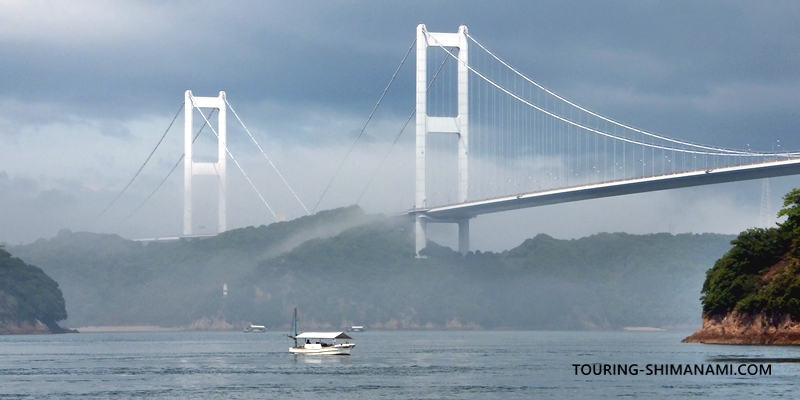
Traveling during the quieter season is one of my personal favourite ways to explore. On Kurushima Kaikyo Bridge or Tatara Bridge, you can take in the views at your own pace without worrying about other people, and stop whenever you like to take as many photos as you want. Riding slowly through farming and fishing villages, the everyday Seto Inland Sea scenery seems to stand out even more in the stillness.
On days when the weather looks good, get out and ride — and if rain does come, there’s no shame in ducking into a café to wait it out over a coffee. That kind of unhurried, weather-watching approach is, I think, exactly what cycle touring is for. Keeping your schedule flexible is especially important when travelling during tsuyu.
AD (Google AdSense)
Practical Tips for Cycling During the Rainy Season
More Than Rain: Watch Out for Heat and Humidity
One thing that often catches people off guard when cycling during tsuyu is the heat and humidity — not just the rain itself.
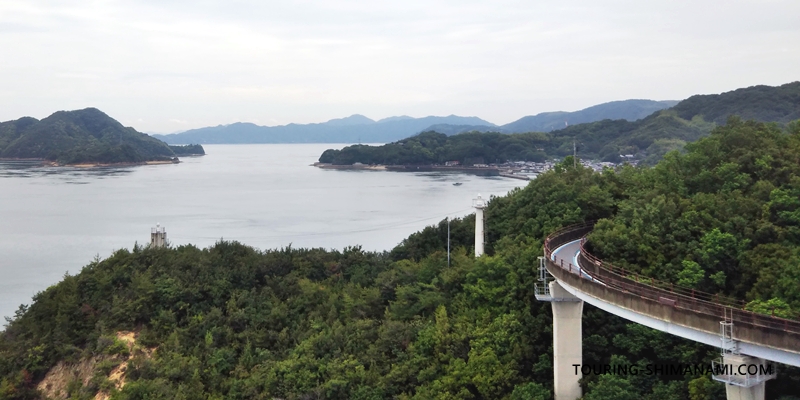
During dry spells within the rainy season, temperatures can climb surprisingly high. According to the data, temperatures exceeding 35°C (95°F) — Japan’s official threshold for an “extremely hot day” — were recorded at some locations in July, toward the end of the rainy season. In the 2023 data, Fukuyama (near Onomichi) saw temperatures exceeding 38°C (100°F) in July. The high humidity during tsuyu also means the heat feels more oppressive than the temperature alone suggests.
Wearing a rain jacket while cycling in warm weather raises your core temperature quickly, which can increase the risk of heat exhaustion. Once the rain lets up and temperatures rise, take off layers as needed to keep cool. During tsuyu, staying on top of your hydration is just as important as it is in the height of summer.
For more detailed advice on gear and riding techniques for wet conditions, I’ve written a separate article that covers this in depth.

Strong and Sudden Winds on the Bridges
The large bridges on Shimanami Kaido are built high over the sea, which makes them more exposed to wind than the roads below. This applies throughout the year — and the rainy season is no exception.
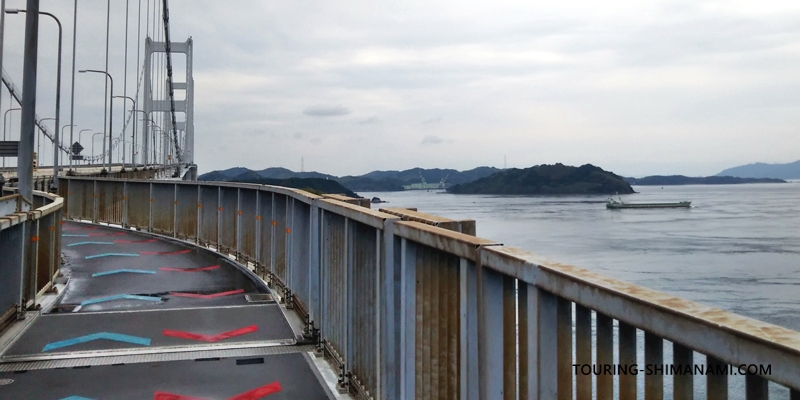
In the analysis data, peak wind gusts exceeding 10 m/s (about 36 km/h or 22 mph) were recorded at multiple locations during the rainy season. In Imabari, peak gusts reached 17.8 m/s; Ikuchijima recorded 17.2 m/s. Even when the average wind speed forecast looks manageable, strong gusts can hit without warning on the bridges.
In wet conditions, road surfaces are also slippery, which makes windy days on the bridges something to take particularly seriously. Before riding onto a bridge, check the wind conditions, and if it feels too strong, there’s no harm in stopping and waiting. Knowing when not to push on is an important part of cycling safely.

AD (Google AdSense)
Flexible Travel: Going With the Weather
Using Hourly Forecasts and Rain Radar
One of the defining features of the rainy season is how quickly the weather can change throughout the day. Some mornings start overcast before clearing up beautifully by midday, while other days stay gray from morning to evening.
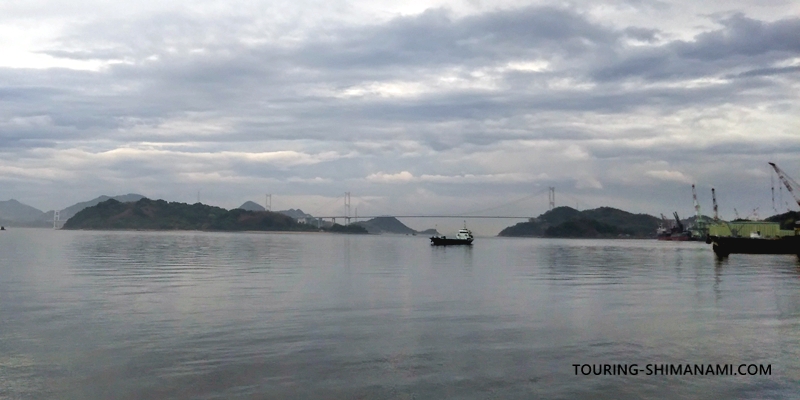
I’d recommend checking an hourly forecast the evening before or first thing in the morning, then adjusting your start time or route based on what you see. The rain radar provided by the Japan Meteorological Agency (JMA) is especially useful during tsuyu — it’s freely available online and gives a real-time picture of where rain clouds are moving. More weather tools in Japan are gradually becoming available in English, so it’s worth finding one you’re comfortable with before you go.

The well-developed cycling infrastructure on Shimanami Kaido makes this kind of flexible approach very manageable. You might decide, for example, to cycle through the Imabari area in the morning, then head to your accommodation early in the afternoon when rain clouds look to be rolling in. That sort of adaptable itinerary is one of the real advantages of cycling here.
Bailing Out Mid-Route: Ferries and Buses Are Your Friends
Shimanami Kaido’s public rental bicycle system has around 10 return terminals between Imabari and Onomichi, so you can return your bike at any point along the route. If the weather suddenly turns or you feel you’ve had enough, being able to return your bike at a mid-island terminal and continue by bus or ferry is genuinely reassuring — especially when travelling during tsuyu.
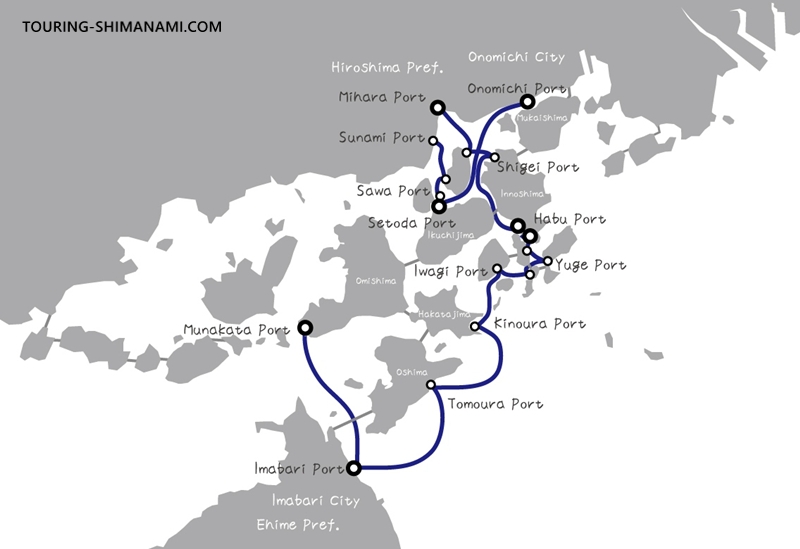
If the rain starts picking up, don’t hesitate — return your rental bike and hop on a ferry to the next island, or take a bus to wherever you’re staying (just be sure to check the timetables in advance, as services can be infrequent). “Cutting the ride short” might sound like giving up, but I think it’s actually the sensible call when the weather isn’t cooperating.
For a more detailed guide on how to combine cycling with public transport, and what to do if you decide to call it a day mid-route, I’ve covered it all in a separate article. I hope you’ll find it useful.

Tsuyu on Shimanami Kaido: It All Comes Down to Planning
I’d encourage you to embrace the rainy season as a distinctly Japanese experience. Just as traditional haiku poems always include a seasonal word (kigo), the Japanese have a deep cultural attunement to the rhythms of the seasons — and tsuyu marks one of the most evocative transitions of the year. The mist-veiled islands have an almost ink-wash painting quality to them, and the hydrangeas (ajisai in Japanese) that bloom in full colour during this season are a sight you simply won’t find at any other time of year.
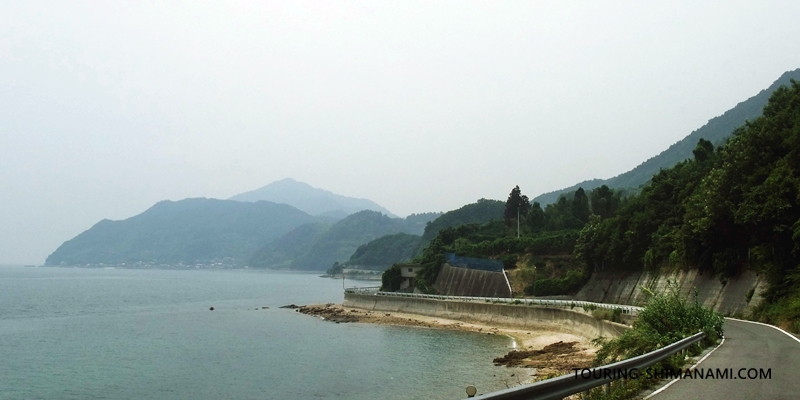
The rainy season on Shimanami Kaido does bring a higher risk of wet weather — there’s no getting around that. But looking at the historical data, rain-free days account for roughly half to two-thirds of the tsuyu period, leaving plenty of opportunities to get out on the bike and enjoy the sunshine. The islands feel wonderfully quiet when tourist numbers are low, and there’s something special about riding at your own pace through the peaceful Seto Inland Sea scenery.
At the same time, it’s important to be prepared for heat and humidity, and to have a plan for when heavy rain or strong winds arrive. Keep an eye on the forecast, stay flexible, and leave room in your schedule to adapt. If you do, I think you’ll find that cycling Shimanami Kaido during tsuyu can be a genuinely rewarding experience. If you’re feeling a little uncertain about visiting during this season, I hope this article helps put your mind at ease. With the right preparation and the right mindset, it can turn into a wonderful bike trip. I hope this page serves as a useful starting point for your trip.
AD (Google AdSense)
Reference: Rainy season data for the Shimanami Kaido
Rainfall data by location
This table summarizes the total rainfall during the rainy season, the number of rainy days (0.5 mm or more), and the maximum daily rainfall recorded at each location.
| Location | Year | Total rainfall during rainy season | Rainy days | Maximum daily rainfall (Month/Day) |
|---|---|---|---|---|
| Imabari | 2022 | 307.5 mm | 16 days | 108.0 mm (7/8) |
| 2023 | 416.0 mm | 23 days | 78.5 mm (6/30) | |
| 2024 | 445.0 mm | 16 days | 86.0 mm (6/18) | |
| 2025 | 188.0 mm | 12 days | 68.5 mm (6/10) | |
| Omishima | 2022 | 246.5 mm | 19 days | 53.5 mm (7/8) |
| 2023 | 379.5 mm | 23 days | 84.0 mm (6/30) | |
| 2024 | 431.0 mm | 17 days | 69.0 mm (6/18) | |
| 2025 | 201.0 mm | 11 days | 56.5 mm (6/23) | |
| Ikuchijima | 2022 | 210.0 mm | 18 days | 51.0 mm (7/14) |
| 2023 | 330.0 mm | 23 days | 65.5 mm (6/30) | |
| 2024 | 387.5 mm | 14 days | 80.5 mm (7/1) | |
| 2025 | 178.5 mm | 11 days | 54.5 mm (6/23) | |
| Fukuyama | 2022 | 188.5 mm | 18 days | 48.0 mm (7/19) |
| 2023 | 293.0 mm | 23 days | 48.5 mm (7/9) | |
| 2024 | 320.0 mm | 15 days | 70.5 mm (7/1) | |
| 2025 | 104.5 mm | 10 days | 44.0 mm (6/10) |
Number of days by rainfall intensity (average during the rainy season)
This average data categorizes rainy-season days by rainfall intensity and can be used as a general guide when deciding whether cycling conditions are suitable.
| Year | Length of rainy season (average) | No rainfall (0.0 mm) | Light rain (0.5–29.5 mm) | Heavy rain (30.0 mm or more) |
|---|---|---|---|---|
| 2022 | 41.5 days | 24.0 days (58%) | 14.7 days (35%) | 2.8 days (7%) |
| 2023 | 49.0 days | 26.0 days (53%) | 18.8 days (38%) | 4.2 days (9%) |
| 2024 | 31.5 days | 16.0 days (51%) | 10.7 days (34%) | 4.8 days (15%) |
| 2025 | 19.5 days | 8.5 days (44%) | 8.8 days (45%) | 2.2 days (11%) |
Other weather factors (extremes during the rainy season)
In addition to rainfall, these figures highlight temperature (heat), wind speed (bridge safety), and sunshine duration (opportunities for cycling) during the rainy season.
| Item | Recorded maximum value or trend | Example location and date |
|---|---|---|
| Highest temperature | 38.2°C (extreme heat) | Fukuyama (2023/7/27) |
| Maximum instantaneous wind speed | 17.8 m/s (strong winds) | Imabari (2022/6/24) |
| Longest sunshine duration | 13.8 hours (clear weather) | Imabari (2022/6/29) |
- Temperature trend: In late July, near the end of the rainy season, daytime temperatures can exceed 35°C (95°F). Combined with high humidity, this significantly increases the risk of heat-related illness.
- Wind trend: Even when average wind speeds are relatively low, sudden gusts exceeding 10 m/s can occur. Extra caution is needed on the bridges, where crosswinds can be strong.
- Sunshine trend: Even during the rainy season, there are many sunny breaks with more than 10 hours of sunshine, providing excellent opportunities for cycling.
This page has covered what cycling on Shimanami Kaido is like during the rainy season. For a broader overview of cycling on Shimanami Kaido — suitable for everyone from first-timers to experienced riders — please visit the page below.